

North Carolina markets we serve
Our North Carolina coverage includes 191 ZIP codes grouped into 5 local markets. Each market page lists every ZIP code and city it covers.
CACharlotte
93 ZIP codes · Charlotte, Indian Trail, Marshville, Matthews…
GGGastonia / Gaston County
31 ZIP codes · Alexis, Belmont, Bessemer City, Cherryville…
CCConcord / Cabarrus County
25 ZIP codes · Albemarle, Ansonville, Badin, Concord…
HNHuntersville / North Charlotte
20 ZIP codes · Catawba, Claremont, Conover, Cornelius…
SISalisbury / Iredell-Rowan Corridor
22 ZIP codes · Barium Springs, China Grove, Cleveland, East Spencer…
Water Damage in North Carolina: An Overview
North Carolina stretches from the Atlantic coast to the Appalachian Mountains, and nearly every part of the state has been touched by tropical weather at some point. While the coast faces storm surge, inland regions like the Charlotte area are more often affected by heavy rain, flash flooding, and wind from weakening tropical systems. Add a humid subtropical climate, clay soils, and a large number of crawl space homes, and water damage in North Carolina often has as much to do with moisture and humidity as with sudden floods.
Restore My Water Damage serves selected markets in the Charlotte region of North Carolina. This page explains local risk drivers, housing features, insurance context, and practical steps to take. Our North Carolina markets are listed below.
North Carolina Water Damage Risk Drivers
Remnants of hurricanes and tropical storms
North Carolina has a long history of tropical impacts. For inland areas like Charlotte, the danger typically comes from heavy rainfall and wind as storms move over land. Hurricane Hugo in 1989 caused severe wind damage in Charlotte, bringing down large numbers of trees onto homes and power lines. In late September 2024, Hurricane Helene caused catastrophic flooding in western North Carolina and brought heavy rain and wind to other parts of the state as well. These events show how tropical systems can affect communities hundreds of miles from the coast.
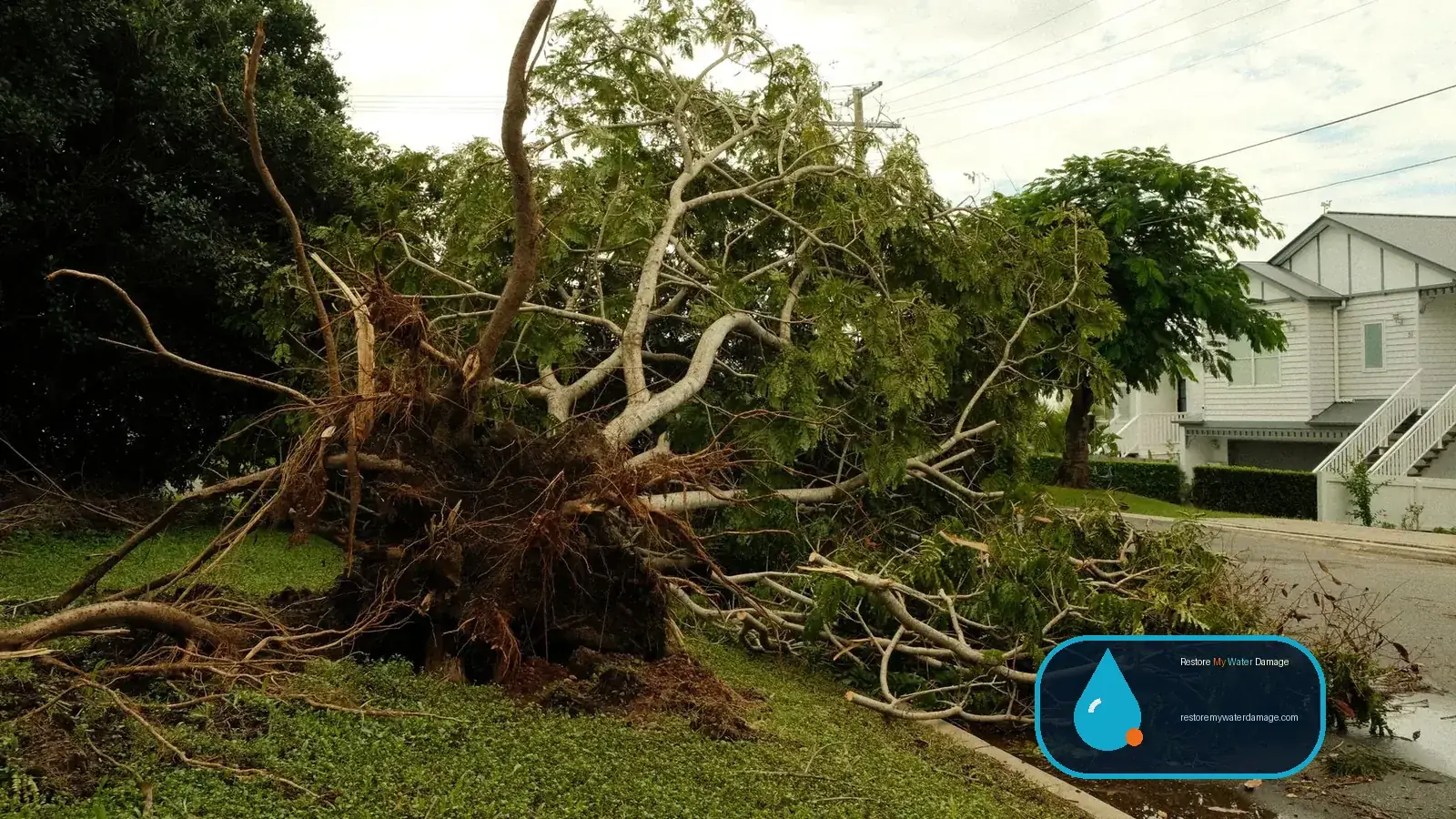
Tree damage deserves special mention. The Charlotte area has a substantial tree canopy, and falling trees and limbs during storms can puncture roofs, letting rain pour into attics and living spaces. See storm and rain water damage.
Heavy summer thunderstorms and flash flooding
Summer in the Charlotte region brings frequent afternoon and evening thunderstorms that can drop intense rain in a short time. Urban creeks can rise quickly, and low-lying streets and yards can flood. Rapid development in the region has added impervious surfaces that increase runoff. Charlotte-Mecklenburg Storm Water Services manages local drainage and floodplain programs, reflecting how significant urban flooding is in the area.
Humidity and slow drying
North Carolina's humid summers slow evaporation and create conditions where mold can grow quickly on wet materials. A leak that might dry out on its own in a dry climate can lead to lingering moisture, odor, and microbial growth here. Controlled dehumidification is often essential. Our mold and water damage page explains the connection.
Crawl space moisture
Many homes in the Charlotte area are built over vented crawl spaces. Warm, humid outdoor air entering a cooler crawl space can condense on pipes, ducts, and framing. Poor grading or clogged gutters can let rainwater pool on the crawl space floor. Over time, this can lead to damp insulation falling from floor joists, wood rot, mold growth, pest activity, and musty odors inside the home.
Red clay soils and drainage
The Piedmont region's red clay soils drain slowly. During prolonged rain, water can sit against foundations and seep into crawl spaces and basements. Proper grading, gutter maintenance, and downspout extensions make a large difference.
Winter freezes
Charlotte winters are generally mild, but freezing temperatures occur, and occasional hard freezes can burst pipes in crawl spaces, exterior walls, and garages that are not well insulated. Ice storms can also bring down trees and power lines, causing roof damage and outages that let pipes freeze.
North Carolina Housing Features That Affect Water Damage
| Feature | Water damage implication |
|---|---|
| Vented crawl spaces | Humidity, condensation, standing water, and wood rot under floors |
| Basements on sloped lots | Water entry on the uphill side; hydrostatic pressure |
| Slab foundations in newer subdivisions | Slab leaks and water spreading under flooring |
| Heavy tree cover | Fallen trees puncture roofs during storms |
| HVAC ducts in crawl spaces and attics | Condensation and condensate leaks |
| Rapid suburban growth | Newer construction but increased stormwater runoff |
| Pre-1978 homes in established neighborhoods | Lead paint precautions during repairs |
North Carolina Seasonal Water Damage Risk (Charlotte Region)
| Season | Primary risks | Suggested actions |
|---|---|---|
| Winter (Dec to Feb) | Occasional hard freezes, ice storms, fallen trees | Insulate crawl space pipes, close foundation vents during freezes if appropriate |
| Spring (Mar to May) | Severe thunderstorms, heavy rain, rising creeks | Clean gutters, check grading, trim trees near the roof |
| Summer (Jun to Aug) | Afternoon storms, flash floods, high humidity, AC condensate leaks | Run dehumidification, check crawl space moisture, clear condensate lines |
| Fall (Sep to Nov) | Peak tropical season remnants, heavy rain, wind | Review flood coverage, secure outdoor items, have a storm plan |
| Year-round | Supply line leaks, water heater failures, crawl space humidity | Inspect hoses and water heaters, monitor crawl space conditions |

North Carolina Insurance Context
North Carolina Department of Insurance
The North Carolina Department of Insurance regulates insurance companies in the state. It provides consumer services, including help with questions and complaints about claims. After major storms, the department often issues guidance for policyholders on filing claims and avoiding fraud.
Flood insurance
Standard homeowners policies generally exclude flood damage. Flood insurance is available through the National Flood Insurance Program in participating communities, as well as from private insurers. Inland flooding from tropical rainfall has repeatedly affected properties outside designated high-risk zones in North Carolina, so it is worth evaluating coverage regardless of your flood zone. NFIP policies typically have a waiting period before coverage begins.
Common policy considerations
- Named storm or hurricane deductibles: some policies apply a separate deductible for hurricane-related damage.
- Tree damage: coverage for tree removal and resulting water damage depends on policy terms and whether the tree struck a covered structure.
- Crawl space moisture and rot: damage from long-term humidity or seepage is commonly excluded as maintenance-related.
- Mold: many policies limit mold coverage, making prompt drying important.
- Water backup: often requires an endorsement.
This is general information only. Review your policy language and talk with your insurer or agent. Our insurance claims guide explains the claims process in more detail.
What to Do After Water Damage in North Carolina
- Stay safe. Avoid floodwater, downed power lines, and damaged trees that may still fall.
- Stop the source. Shut off the main water valve for plumbing leaks.
- Protect the roof opening only if safe, or arrange temporary tarping by a professional.
- Document the damage inside and outside, including fallen trees.
- Check the crawl space from the access door for standing water, without entering if electrical hazards are possible.
- Move belongings out of wet areas.
- Notify your insurer promptly.
- Start drying quickly and control humidity to limit mold.
- Treat floodwater as contaminated.
- Keep receipts for temporary repairs and expenses.
See what to do after a water leak for detailed first steps.
Prevention Tips for North Carolina Properties
- Keep gutters and downspouts clear and direct water well away from the foundation.
- Inspect your crawl space at least seasonally for standing water, damp insulation, and odor.
- Ask a qualified contractor whether a vapor barrier, drainage, or crawl space encapsulation makes sense for your home.
- Have large trees near the house evaluated by an arborist.
- Insulate pipes in crawl spaces and exterior walls.
- Clear AC condensate lines before summer.
- Replace aging supply lines and consider leak detectors.
For more, see the water damage prevention guide.
Common Water Damage Scenarios in North Carolina Homes
Tree through the roof during a tropical storm
When a large tree falls onto a house during heavy rain, water can pour into the attic and rooms below for hours before a tarp is installed. Wet insulation, ceiling drywall, and flooring often need removal. Tree removal is usually done by a tree service, while roof tarping and drying may happen alongside it. Photos of the tree in place before removal are useful for insurance.
Crawl space full of water after heavy rain
A homeowner notices a musty smell or hears the HVAC system working harder and finds standing water in the crawl space. The source may be poor grading, overflowing gutters, a clogged downspout, or a broken plumbing line. Water must be pumped out, the source corrected, and the crawl space and any wet insulation and framing dried or replaced.
Sweating ductwork and wet subfloor
In summer, cold supply ducts in a humid crawl space can collect condensation that drips onto insulation and the ground. Over time, subflooring above can become damp and hardwood floors can cup. Fixing this often involves duct insulation repairs, moisture control, and drying.
Basement seepage on a sloped lot
Homes built into hills in the Charlotte region may take on water along the uphill basement wall after multiple days of rain. Finished walls can hide wet drywall and bottom plates. Exterior drainage improvements usually go hand in hand with interior drying.
HVAC condensate overflow in the attic
Air handlers in attics produce a large amount of condensate during humid summers. A clogged line can overflow the pan and saturate ceiling drywall. Float switches that shut down the system when the pan fills help prevent this.
Pipe freeze during a winter outage
A rare hard freeze combined with an ice storm power outage can freeze pipes in crawl spaces and exterior walls. When power and heat return, leaks may begin under floors where they are hard to see. Checking the crawl space after a freeze is a good habit. See burst pipe cleanup.
In every one of these scenarios, the common thread is moisture that outlasts the visible water. In the Charlotte region's humid climate, confirming dryness with moisture readings in framing, subfloors, and crawl space materials, rather than relying on how surfaces look or feel, is what separates a finished job from a future mold problem.
How North Carolina Markets Are Organized
Our North Carolina coverage centers on the Charlotte region, one of the fastest-growing metropolitan areas in the Southeast. The region includes Charlotte's established neighborhoods, with older homes on crawl spaces and mature tree cover, along with surrounding suburban communities that have added large numbers of newer homes. The Charlotte region also extends into South Carolina, where our York and Lancaster county coverage is described on the  South Carolina hub.
Markets group nearby ZIP codes into practical service regions. The North Carolina markets below list ZIP counts, and you can check your specific address on the service areas page.
Services Available in North Carolina Markets
- Emergency water damage restoration
- Storm and rain water damage
- Flood damage restoration
- Water extraction and structural drying
- Mold and water damage
- Residential water damage restoration
- Commercial water damage restoration
Licensing in North Carolina: the restoration work is performed by independent providers, and contractor licensing or registration rules in North Carolina depend on the type and size of the job. Before work starts, ask your provider for their North Carolina license or registration number and proof of liability insurance, and verify it with the state licensing board. Our guide to choosing a restoration company lists the questions to ask.
Helpful North Carolina Resources
- North Carolina Department of Insurance: consumer help and complaints.
- North Carolina Emergency Management: ReadyNC preparedness and recovery information.
- Charlotte-Mecklenburg Storm Water Services: local drainage and floodplain information.
- NFIP FloodSmart: flood insurance information.
- FEMA Flood Map Service Center: flood zone lookup.
For help in a covered North Carolina ZIP code, call (833) 435-4276 or visit the contact page. Our North Carolina markets are listed below.
Frequently Asked Questions
Why are crawl spaces a water damage concern in North Carolina?
Many North Carolina homes are built over crawl spaces. In a humid climate, moisture from the soil and outside air can raise humidity under the house, and poor drainage can let water pool there. Over time this can lead to wood rot, mold, sagging floors, and damaged insulation. Vapor barriers, drainage, and moisture control help reduce these problems.
Can Charlotte be affected by hurricanes?
Although Charlotte is far inland, tropical systems can still bring damaging wind and heavy rain to the region as they move across the Carolinas. Hurricane Hugo in 1989 caused major wind damage in Charlotte, and remnants of other tropical systems have brought flooding rains. Inland flooding from tropical rainfall is a significant risk across North Carolina.
Does North Carolina homeowners insurance cover flooding?
Standard homeowners policies generally exclude flood damage. Flood insurance is available through the National Flood Insurance Program in participating communities and from private insurers. Flooding can occur outside mapped high-risk areas, particularly during tropical rain events. Review your policy and contact the North Carolina Department of Insurance with questions about your coverage or claim.
How quickly can mold grow after water damage in a humid climate?
Mold can begin growing on damp materials within roughly one to two days under favorable conditions, according to widely cited EPA guidance. North Carolina's warm, humid summers can make those conditions common. Starting extraction and drying quickly, keeping indoor humidity controlled, and removing materials that cannot be dried promptly are the best ways to limit growth.
How much does water damage restoration cost in North Carolina?
Costs in North Carolina generally track typical national ranges: about $1,000 to $5,000 for a smaller clean-water leak and $10,000 or more for flooding, sewage, or damage involving crawl spaces and multiple rooms. Pricing is set by the independent provider and depends on square footage, water category and materials. Getting a written estimate before work begins is always wise. Call (833) 435-4276 24/7 and we'll connect you with a local restoration provider.
What should I do after a hurricane or tropical storm floods my North Carolina home?
Wait until authorities say it is safe to return, keep power off if water reached outlets, and avoid wading through floodwater. Photograph everything, then remove standing water and wet porous materials as soon as possible, since humid conditions speed mold growth. Contact your insurer and your flood policy carrier separately, because wind and flood claims are often handled differently. Call (833) 435-4276 24/7 and we'll connect you with a local restoration provider.
Do North Carolina water damage restoration companies need a license?
North Carolina does not have a dedicated water restoration license, but providers doing repair work over certain dollar thresholds generally need a general contractor license, and mold or electrical work may carry other requirements. Ask any provider about their state or local licensing, liability insurance, and IICRC training before signing. The independent providers we connect you with hold their own licenses.
Can frozen pipes burst in North Carolina winters?
Yes. Although winters are milder than in northern states, cold snaps regularly drop temperatures into the teens, especially in the mountains and Piedmont. Pipes in crawl spaces, exterior walls and unheated garages are most vulnerable. Insulate exposed lines, seal crawl space vents in cold weather, and let faucets drip during hard freezes. Call (833) 435-4276 any time and we'll pass your request to independent local help.
How long does water damage restoration take in a North Carolina home?
Drying typically takes three to five days for a clean-water leak, but North Carolina's humidity can slow evaporation and crawl spaces often need extra dehumidification. Flooded homes or jobs requiring material removal and rebuilding can take several weeks. Daily moisture readings tell the provider when drying is truly complete, so equipment isn't removed too early.