
What is basement water damage restoration?
Basement water damage restoration is the process of removing water from a basement, cleaning or removing affected materials, drying the concrete, framing and finishes to verified levels, and addressing the cause so it is less likely to happen again. It includes emergency extraction, contamination assessment, tear-out of unsalvageable materials, structural drying, sanitizing where needed, mold prevention and rebuilding finished spaces.
Basements are the most flood-prone part of most homes. They sit below grade, surrounded by soil that holds water. They house the water heater, washing machine, main drain lines and often the sump pit. And many are finished living spaces with carpet, drywall and furniture that do not tolerate water well. Those conditions make basement losses different from a leak on an upper floor.
The water source decides how the cleanup must be done. Clean water from a supply line is handled very differently from a sewer backup through a floor drain. Under the IICRC S500 standard, restorers classify water by contamination (Category 1, 2 or 3) and plan removal, cleaning and drying accordingly. You can read the definitions in clean vs gray vs black water.
Key takeaway: The cause of basement water determines the contamination level, the drying plan, the insurance coverage that may apply, and the fix needed to stop it from happening again.
Is it safe to walk into a flooded basement?
Not until you know the power is off. Standing water in a basement often reaches outlets, extension cords, furnaces, water heaters, washers, dryers and sometimes the electrical panel itself. Walking into energized water can cause fatal shock. Shut off power at the main panel only if you can reach it without standing in water; otherwise, call the utility or a licensed electrician. Also watch for gas appliance issues and contaminated water.
Safety warning: Never step into a flooded basement if electricity might be on. If you smell gas, leave the house and call the gas utility or 911 from outside. Do not use gas-powered pumps or generators inside the home or attached garage because of carbon monoxide. Treat water from floor drains, toilets or outside flooding as contaminated and wear boots, gloves and eye protection.
Other basement hazards
- Gas appliances: Furnaces and water heaters with submerged burners or controls should be inspected by a qualified technician before use.
- Structural pressure: Bowing or newly cracked foundation walls can indicate serious outside pressure.
- Contamination: Sewage and floodwater carry bacteria and viruses.
- Stored chemicals: Paint, fuel, pesticides and cleaners can spill into the water.
- Slips and collapse: Wet stairs, floating objects and saturated ceiling drywall.
What causes basement water damage?
Basement water usually comes from one of five sources: groundwater forced in by hydrostatic pressure, surface water from poor drainage or heavy storms, a failed sump pump, a sewer or drain backup, or an internal plumbing or appliance leak. Identifying the exact source is the first diagnostic step, because it affects the water category, the insurance picture and the repair needed.

| Source | Typical signs | Usual water category | Long-term fix |
|---|---|---|---|
| Hydrostatic pressure / groundwater | Water at floor-wall joint, through slab cracks, after heavy rain or snowmelt | Often Category 1 or 2 initially; can worsen over time | Interior or exterior drainage, sump system, crack repair, grading |
| Surface water and poor grading | Water entering through window wells, walls on one side, near downspouts | Category 2 to 3, depending on contact with soil and contaminants | Regrading, downspout extensions, window well covers and drains |
| Sump pump failure | Overflowing sump pit, power outage, pump not running | Category 2, may become Category 3 | Pump replacement, backup pump, alarm, check valve, generator |
| Sewer or drain backup | Water rising from floor drain, toilet or tub; odor | Category 3 | Drain cleaning, camera inspection, backwater valve |
| Plumbing or appliance leak | Burst pipe, water heater failure, washer hose break | Category 1 if clean and addressed quickly | Plumbing repair, leak sensors, supply line replacement |
| Overland flooding | Water entering during a regional flood event | Category 3 | Flood mitigation measures; flood insurance |
How hydrostatic pressure works
Hydrostatic pressure is the force water exerts because of its weight. When rain or snowmelt saturates the soil around a foundation, or the water table rises, water fills the soil pores and pushes against basement walls and upward under the slab. Concrete is porous, and basements have weak points: the cold joint where floor meets wall, shrinkage cracks, tie-rod holes and pipe penetrations. Water follows the path of least resistance through those openings.
The deeper the saturated soil, the greater the pressure. That is why basements often leak days after a storm, once groundwater has risen, rather than during the rain itself. Footing drains and sump systems exist to collect that water and pump it away before it builds enough pressure to enter. Pressure also explains a critical safety point: pumping out a deeply flooded basement too fast while outside soil is still saturated can let outside pressure crack or collapse walls. In those cases, pumping is done in stages.
Why do sump pumps fail, and what should you do?
Sump pumps most often fail because of power outages during storms, stuck float switches, clogged or frozen discharge lines, failed check valves, undersized pumps or simple age. When a sump pump fails, water in the pit rises and spills onto the basement floor. Restore power or replace the pump if safe, remove standing water, and begin drying. Then add protections such as a backup pump and high-water alarm.

Common sump pump failure points
- Power loss: The single most common problem, because heavy storms that raise groundwater also knock out power.
- Float switch: The float can get stuck against the pit wall or tangled in its cord, so the pump never turns on or never shuts off.
- Clogged intake: Silt, gravel and debris in the pit block the pump screen.
- Discharge line problems: Frozen or crushed exterior lines, or lines that dump water right next to the foundation so it cycles back.
- Check valve failure: Water in the discharge pipe flows back into the pit, making the pump short-cycle and wear out.
- Undersized pump: Cannot keep up with heavy inflow.
- Age: Sump pumps are wear items; many homeowners replace them on a schedule rather than waiting for failure.
Sump pump maintenance checklist
- Test the pump every few months by slowly pouring a bucket of water into the pit and confirming it starts and stops.
- Clear debris from the pit and intake screen.
- Confirm the float moves freely and the cord is secured.
- Check that the discharge line is intact, unfrozen and drains well away from the house.
- Listen for unusual noises and watch for frequent cycling.
- Test the battery backup and replace batteries per manufacturer guidance.
- Install a high-water alarm or smart leak sensor near the pit.
- Keep the pump on a dedicated outlet; do not share it with other heavy loads.
How does flooded basement cleanup work?
Flooded basement cleanup moves through safety, source control, documentation, water extraction, contents removal, material tear-out, cleaning and sanitizing, structural drying, verification and repairs. The steps are the same whether the basement is finished or unfinished, but finished basements require more demolition because drywall, carpet and insulation trap water against concrete where it cannot dry.
- Make it safe. Confirm power is off in the basement, check for gas issues, and wear appropriate protective gear.
- Stop the source. Shut off the water main for plumbing leaks, restore or replace the sump pump, or stop using drains if sewage is backing up.
- Document. Photograph water depth, damaged materials and contents before moving anything.
- Extract water. Use submersible pumps for deep water and truck-mounted or portable extractors for remaining water. In deep flooding with saturated soil, pump in stages.
- Remove contents. Move furniture, boxes and appliances out; discard soaked cardboard and paper that cannot be saved.
- Assess contamination. Determine whether water is Category 1, 2 or 3, because this changes what must be removed.
- Tear out wet materials. Remove carpet pad (and carpet when contaminated), wet insulation, and drywall above the wet line. Remove baseboards and paneling to expose wall bottoms.
- Clean and sanitize. Scrub concrete, framing and hard surfaces; apply antimicrobial products per label directions for Category 2 and 3 water.
- Dry the structure. Set dehumidifiers and air movers, targeting framing, bottom plates and concrete.
- Monitor daily. Log moisture content and humidity; adjust equipment as needed.
- Verify dry. Compare readings to unaffected materials or dry standards before rebuilding.
- Repair the cause. Address drainage, grading, sump systems, cracks or plumbing.
- Rebuild. Install finishes, ideally choosing water-resistant materials for below-grade spaces.
For more on each stage, see the water damage restoration process guide and water extraction vs drying.
How does restoration differ for finished and unfinished basements?
Unfinished basements with bare concrete and exposed framing are usually faster and cheaper to restore: extract water, clean, sanitize if needed, and dry. Finished basements hide water behind drywall, under carpet and inside insulated walls, so restoration usually means removing some materials to let concrete and framing dry. Finished spaces also contain more contents and cost more to rebuild.
| Factor | Unfinished basement | Finished basement |
|---|---|---|
| Typical materials | Concrete floor, block or poured walls, exposed joists | Carpet, laminate or vinyl flooring, drywall, insulation, trim, ceilings |
| Tear-out needed | Minimal | Often carpet pad, lower drywall, insulation, baseboards |
| Hidden moisture risk | Low | High, behind walls and under flooring |
| Drying time | Often shorter | Often longer; depends on removal |
| Rebuild cost | Low or none | Can be substantial |
| Insurance complexity | Mostly equipment and contents | Finishes may have coverage limits, especially under flood policies |
Flooring notes for basements
- Carpet and pad: Pad almost always goes; carpet may be saved only after clean water and fast action.
- Laminate: Fiberboard core swells and usually needs replacement.
- Luxury vinyl plank: The planks may survive, but water trapped underneath often requires lifting them so the slab can dry.
- Tile on concrete: Usually cleaned and dried in place.
- Engineered wood: Frequently cups or delaminates below grade.
How do you dry basement concrete and walls?
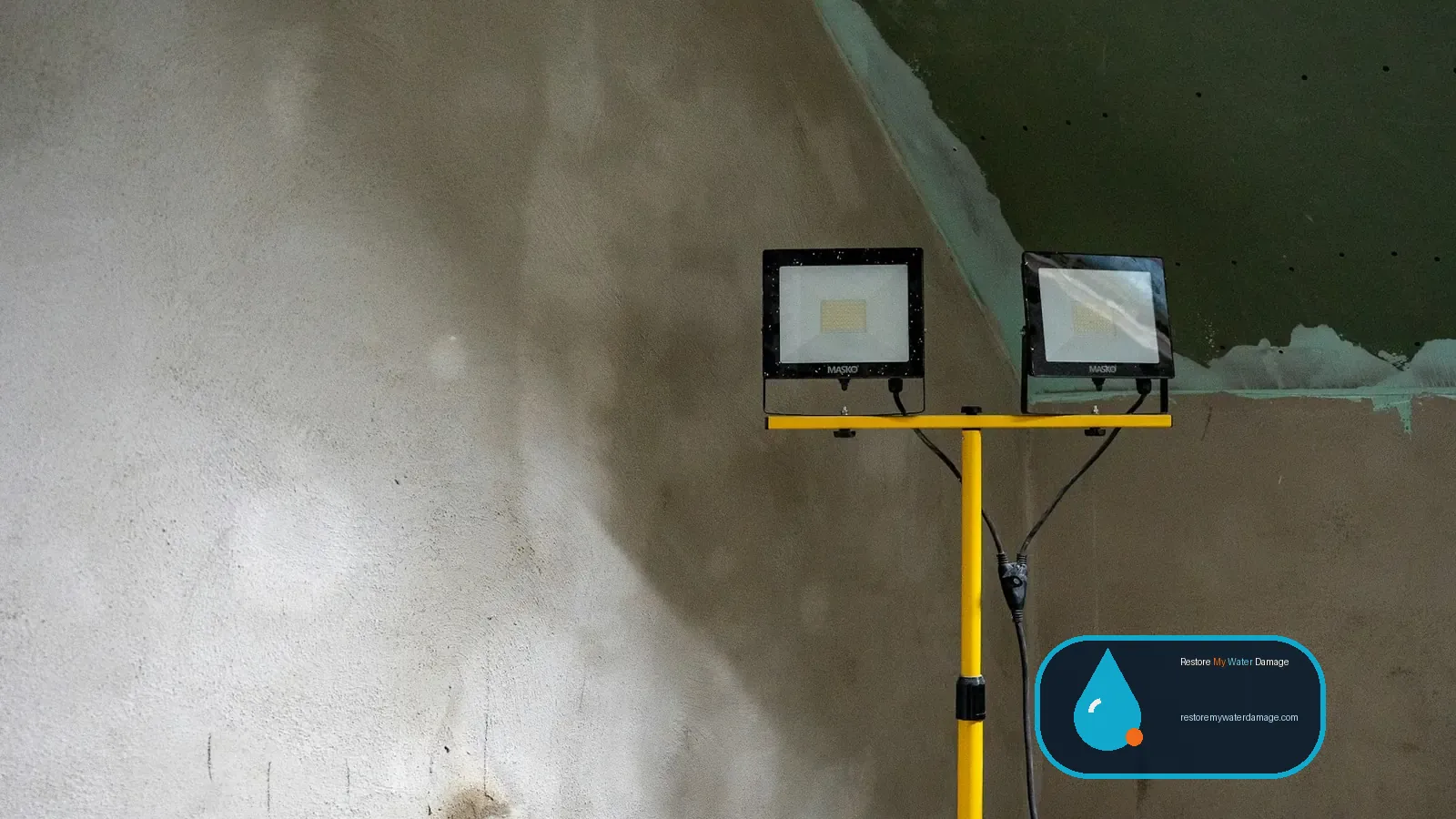
Concrete dries slowly because water is absorbed deep into its pores, and cool basement temperatures reduce evaporation. Professionals remove coverings so concrete surfaces are exposed, use low-grain refrigerant or desiccant dehumidifiers to lower air moisture, direct air movers across the slab and wall bottoms, and sometimes add controlled heat. Moisture readings over several days confirm whether concrete and framing have actually returned to normal levels.
Why basements are hard to dry
- Cool temperatures: Cooler air holds less moisture and slows evaporation. Warming the space moderately helps equipment work.
- Limited airflow: Small windows and enclosed rooms trap humid air.
- Concrete mass: Slabs and block walls act as reservoirs of moisture.
- Ground contact: Groundwater can keep supplying moisture if drainage issues remain.
- Vapor barriers: Plastic behind finished walls can trap moisture against framing.
Can I just use fans?
Fans alone move moist air around but do not remove the water. Without dehumidification, evaporated moisture stays in the basement air, raising humidity and allowing moisture to reabsorb into drywall, wood and contents. Opening windows helps only when outdoor air is drier than basement air, which is often not the case in summer. Professional drying balances dehumidifiers and air movers based on measurements. The equipment guide explains why.
How do you safely pump out a deeply flooded basement?
When a basement holds deep water and the surrounding soil is still saturated, pumping too quickly can be dangerous. The water inside helps balance the pressure of wet soil pushing on the foundation walls from outside. Removing it all at once can let that outside pressure crack, bow or collapse walls. The widely recommended approach is to pump in stages over several days, watching water levels and walls.
Staged pumping method
- Wait until floodwater outside the home has receded and it is safe to work.
- Confirm electricity to the basement is off and use pumps powered from a safe source; keep fuel-powered pumps and generators outdoors.
- Pump the water level down by a few feet, or about one-third of the depth, on the first day.
- Mark the water level and check it the next morning. If the level rose back up, groundwater is still high; wait before pumping more.
- If the level held, pump down another portion and check again the following day.
- Continue until the water is gone, watching for new cracks, bulges or movement in walls.
- If you see signs of structural stress, stop pumping and consult a structural engineer or experienced foundation professional.
For shallow water from a supply line or appliance, with dry soil outside, this precaution usually is not necessary, and fast extraction is the priority.
What happens to basement appliances and mechanical systems?
Basements hold much of a home's mechanical equipment, so flooding often affects the furnace, water heater, washer, dryer, electrical panel and sometimes a boiler or well pressure tank. Equipment with submerged controls, burners, motors or wiring should not be restarted until a qualified technician inspects it. Manufacturers often recommend replacing gas controls and electrical components that were underwater, rather than drying and reusing them.
| Equipment | Why flooding matters | Who should inspect |
|---|---|---|
| Furnace or boiler | Gas valves, burners, blower motors and controls can corrode or malfunction | Licensed HVAC or heating technician |
| Water heater | Gas controls, burners, elements and insulation affected | Plumber or qualified technician; replacement is common |
| Electrical panel and outlets | Corrosion and silt inside breakers and devices create shock and fire risk | Licensed electrician; local inspection may be required |
| Washer and dryer | Motors, controls and gas connections affected | Appliance technician |
| Ductwork | Floodwater contaminates duct interiors and insulation | HVAC contractor; clean or replace |
| Well pressure tank and pump controls | Contamination of water supply, electrical damage | Well contractor; test water before use |
Protecting equipment going forward
- Raise water heaters, furnaces and washers onto platforms where practical.
- Install leak detection with automatic water shutoff valves.
- Replace the water heater before it reaches the end of its expected life, and check the drain pan and relief valve discharge.
- Keep the area around the sump pit and mechanicals clear so problems are noticed quickly.
Which basement waterproofing fixes address the cause?
Restoration dries the basement, but waterproofing stops the next event. The right fix depends on how water enters. Exterior grading and gutter work handle surface water. Interior drain tile and sump systems relieve hydrostatic pressure. Crack injection seals isolated leaks in poured walls. Exterior excavation and membranes address persistent wall seepage. A qualified waterproofing contractor or engineer should diagnose the source before you commit to a system.
| Solution | Best for | Relative cost (general) |
|---|---|---|
| Gutter cleaning, downspout extensions, regrading | Surface water pooling near the foundation | Low |
| Window well drains and covers | Water entering through basement windows | Low to moderate |
| Crack injection (epoxy or polyurethane) | Isolated cracks in poured concrete walls | Low to moderate |
| Interior drain tile and sump pump | Hydrostatic pressure at the floor-wall joint and through the slab | Moderate to high |
| Exterior excavation with membrane and drain tile | Persistent wall seepage, especially in block foundations | High |
| Backwater valve | Sewer backups from the municipal line | Moderate |
Interior sealant paints may reduce minor dampness but do not stop water under hydrostatic pressure. If water is pushing through, it needs a drainage path, not just a coating.
What if the water came from a sewer backup?
Water from a floor drain, toilet or tub backup in a basement is treated as Category 3, meaning it may contain pathogens. Porous materials it touched, such as carpet, pad, drywall, insulation and upholstered furniture, are generally removed and discarded. Hard surfaces are cleaned and sanitized, and the area is dried. Children, pets and anyone with health vulnerabilities should stay out until cleanup is complete.
A sewer backup also needs a plumbing diagnosis. Common causes include tree roots in the lateral line, grease buildup, collapsed pipes and municipal system overloads during heavy rain. A backwater valve can help prevent future backups from the public sewer. See our full page on sewage backup cleanup for the safety and cleaning steps.
What mistakes make basement water damage worse?
The most common mistakes are entering water before the power is off, relying on fans without dehumidifiers, leaving wet carpet pad and drywall in place, rebuilding before concrete and framing are verified dry, and ignoring the cause. Each one either creates a safety hazard or traps moisture that leads to mold, odor and repeat damage. Avoiding them often saves more money than any other decision you make after a basement flood.
- Waiting to see if it dries on its own: Basements are cool and humid, so natural drying is slow and mold can start within a day or two.
- Using household bleach on everything: Bleach does not sanitize porous materials and fumes build up in enclosed basements.
- Running a gas generator or pump indoors: This risks carbon monoxide poisoning.
- Pumping deep water all at once: Can damage foundation walls when soil outside is saturated.
- Throwing items away without photos: Weakens an insurance claim.
- Covering damp walls with new drywall or paint: Traps moisture and leads to hidden mold.
- Skipping the root cause: Without fixing drainage, the sump system or plumbing, the next storm can undo the restoration.
How do you prevent mold after basement water damage?
To prevent mold after basement flooding, get water out quickly, remove soaked porous materials, dry concrete and framing completely, and then keep humidity under control. Mold can start growing within roughly 24 to 48 hours on damp drywall, wood and cardboard. Running a dehumidifier to keep basement relative humidity below about 50 to 60 percent after restoration helps prevent both mold and musty odors.
- Store items in plastic bins on shelves rather than cardboard boxes on the floor.
- Leave a gap between stored items and exterior walls for air circulation.
- Use a dehumidifier with a hose to a drain so it runs continuously.
- Choose mold-resistant drywall, closed-cell foam insulation and inorganic flooring when rebuilding.
- Check hidden areas such as under stairs and behind furnaces for musty odor.
If you see growth larger than about 10 square feet, EPA guidance generally suggests professional help. Visit mold and water damage for more.
Does insurance cover basement water damage?
Basement coverage depends on the cause of the water and your policy. Sudden, accidental internal leaks such as a burst pipe or failed water heater are often covered by homeowners insurance. Sump pump failure and sewer backup usually need a water backup endorsement. Groundwater seepage, gradual leaks and lack of maintenance are commonly excluded. Surface flooding usually requires flood insurance, which has limited basement coverage. Check your policy and endorsements.
| Cause | Common coverage path (general; verify your policy) |
|---|---|
| Burst pipe or sudden appliance failure | Often homeowners policy, subject to deductible |
| Sump pump overflow | Often requires water backup endorsement |
| Sewer or drain backup | Often requires water backup endorsement |
| Groundwater seepage through walls or floor | Commonly excluded |
| Overland flooding | Flood insurance; basement finishes and contents often limited |
| Long-term leak or poor maintenance | Commonly excluded |
Read water damage and homeowners insurance for guidance on documenting and filing a claim.
How much does basement water damage restoration cost?
Basement restoration costs vary with square footage, water depth, contamination, finishes and rebuilding needs. As a broad national industry estimate, small clean-water cleanups in unfinished basements may run roughly $1,000 to $4,000; finished basements often cost $4,000 to $15,000 or more; and sewage or deep flooding with full rebuilds can go higher. Waterproofing and drainage improvements are separate and vary widely.
- Size and depth: More water and area means more extraction and equipment days.
- Category: Sewage and floodwater require more removal, PPE and sanitizing.
- Finishes: Drywall, carpet and cabinetry add demolition and rebuild costs.
- Contents: Moving, cleaning or disposing of stored belongings.
- Equipment replacement: Furnaces, water heaters and washers damaged by water.
- Cause repairs: Sump systems, drain tile, crack injection, grading or backwater valves.
More detail is in the water damage restoration cost guide.
How can you prevent basement water damage?
Most basement water problems can be reduced with good drainage, a reliable sump system, backflow protection and plumbing maintenance. Keep gutters clean and downspouts extended well away from the foundation, grade soil to slope away from the house, maintain the sump pump with a backup, install a backwater valve if sewer backups are a risk, and use leak sensors near water heaters, washers and sump pits.
Basement flood prevention checklist
- Clean gutters and extend downspouts several feet from the foundation.
- Regrade soil so it slopes away from the house.
- Install covers or drains in window wells.
- Test the sump pump regularly and add a battery or water-powered backup.
- Install a high-water alarm and leak sensors.
- Consider a backwater valve on the main sewer line; check local permit rules.
- Replace washer hoses with braided stainless steel hoses and inspect water heaters.
- Seal foundation cracks and consult a waterproofing professional about persistent seepage.
- Insulate pipes in cold areas to prevent freezing.
- Keep valuables and documents off the basement floor.
- Review your policy for water backup and flood coverage.
Our water damage prevention guide covers more options. If your basement is wet now, stay safe around electricity and call (833) 435-4276 — we answer 24 hours a day, 7 days a week.
Frequently Asked Questions
What should I do first when my basement floods?
Stay out of the water until you are sure the electricity to the basement is off, because outlets, furnaces and appliances may be submerged. If you cannot reach the panel safely, call the utility or an electrician. Then stop the source if possible, photograph the damage, call your insurer, move valuables upstairs, and arrange water extraction and drying as quickly as you can.
Why does water come up through my basement floor?
Usually because of hydrostatic pressure. When soil around and beneath the foundation becomes saturated, groundwater presses against the slab and walls and forces its way through cracks, the joint where the floor meets the wall, and pipe penetrations. High water tables, heavy rain, snowmelt, poor grading and clogged footing drains all increase the pressure. A sump system is designed to relieve it.
Is basement flooding covered by homeowners insurance?
It depends on the cause. Sudden internal leaks like a burst pipe are often covered. Sump pump failure and sewer backup usually require a separate water backup endorsement. Groundwater seepage and gradual leaks are commonly excluded, and surface flooding typically needs flood insurance, which itself has limited basement coverage. Review your policy and endorsements and ask your agent which scenarios apply.
How long does it take to dry a flooded basement?
Many basements dry in about three to seven days with professional extraction, dehumidifiers and air movers. Concrete slabs and block walls hold moisture much longer than drywall or wood, and cool basement temperatures slow evaporation. Finished basements with carpet, drywall and insulation may need material removal first. Contaminated water adds sanitizing time. Moisture readings, not appearance, determine when drying is complete.
Can I dry a wet basement carpet myself?
If the water was clean, the area is small and you act within a day or so, a carpet may be salvageable with a wet vacuum, pad removal, dehumidifiers and fans. Carpet pad usually needs replacement. If the water came from a sewer backup, floodwater, or sat for more than a couple of days, the carpet and pad should be discarded because they cannot be reliably sanitized.
What causes a sump pump to fail?
Common causes include power outages during storms, a stuck or tangled float switch, an undersized pump overwhelmed by inflow, a clogged intake or discharge line, a frozen discharge pipe, a failed check valve, and old age. Pumps often run hardest exactly when power is least reliable. Battery or water-powered backup pumps, high-water alarms and regular testing reduce the chances of failure.
Will a flooded basement get moldy?
It can. Basements are naturally cool and humid, and mold can begin growing on wet drywall, wood, carpet and stored cardboard within roughly 24 to 48 hours. Prompt extraction, removal of soaked porous materials, and dehumidification to bring relative humidity down reduce the risk. After drying, keeping basement humidity below about 50 to 60 percent helps prevent future growth.
How much does basement water damage restoration cost?
As a broad national industry estimate, cleanup of a small unfinished basement with clean water might cost roughly $1,000 to $4,000, while finished basements with drywall and carpet removal often run $4,000 to $15,000 or more. Sewage contamination, deep water and rebuilding raise costs further. Waterproofing or drainage repairs are usually priced separately. Always request an itemized written estimate.
Should I pump out a flooded basement all at once?
If floodwater surrounds the house, pumping too fast can let saturated soil push on the foundation walls and cause cracks or bowing. Professionals often remove deep standing water in stages, lowering the level a few feet per day when groundwater is high. For a burst pipe or failed water heater with dry soil outside, faster extraction is usually fine. Turn off power to the basement before anyone steps into the water. Call (833) 435-4276 24/7 and we'll connect you with local help.