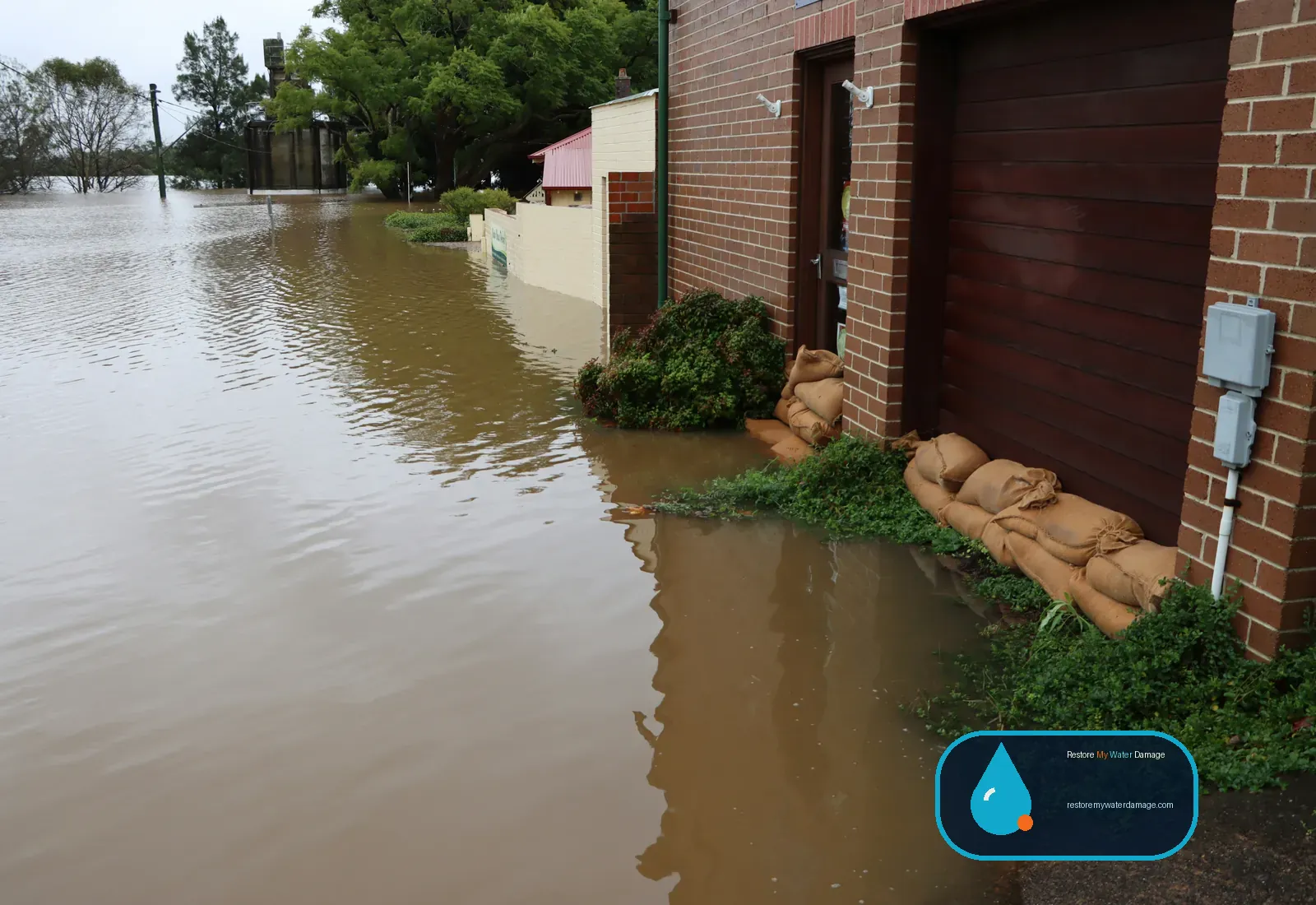
What is flood damage restoration?
Flood damage restoration is the process of making a flooded building safe, clean and dry again, then rebuilding what had to be removed. It includes safety checks, pumping and extraction, mud and debris removal, tearing out contaminated porous materials, cleaning and sanitizing, structural drying, mold prevention, and reconstruction. It differs from a typical leak cleanup mainly because floodwater is contaminated and often arrives in large volume with silt and debris.
In insurance and restoration language, a "flood" usually means water from outside the home that covers normally dry land: overflowing rivers and streams, heavy rain runoff, storm surge, or mudflow. That is different from an internal water loss such as a burst supply line, which our burst pipe water damage cleanup page covers. The distinction matters for both how the cleanup is done and which insurance policy may apply.
The IICRC S500 standard classifies floodwater as Category 3, the most contaminated class of water. That classification is the reason flood restoration relies on removing materials rather than drying them in place, and on protective equipment and sanitation throughout the job.
Key takeaway: Treat all floodwater as contaminated. Porous materials it soaks are usually removed, and remaining surfaces are cleaned and sanitized before drying.
Is it safe to enter a flooded home?
Only after local authorities say the area is safe and electrical hazards are controlled. Floodwater can hide energized wiring, gas leaks, structural damage, sharp debris, displaced wildlife and sewage. Never walk through standing water if power to the building might be on. Wear waterproof boots, gloves and eye protection, and use a respirator when handling moldy or dusty materials.
Safety warning: Do not enter standing water if outlets, cords, appliances or the electrical panel may be submerged and the power is not confirmed off. Have a qualified electrician shut off and inspect power. If you smell gas, leave immediately and call the gas utility or 911 from a safe distance. Never run gasoline generators, pressure washers or pumps indoors or in garages; carbon monoxide can kill quickly.
Common hazards after flooding
- Electrical shock: Submerged outlets, wiring and appliances; downed power lines outdoors.
- Carbon monoxide: Generators and fuel-powered equipment used in enclosed spaces.
- Structural damage: Undermined foundations, buckled floors and saturated ceilings that can collapse.
- Contamination: Bacteria, viruses and parasites from sewage; fuel, pesticides and chemicals from garages and farms.
- Physical injuries: Nails, glass and debris hidden in mud; slippery surfaces.
- Animals: Snakes, rodents and insects displaced by floodwater.
- Mold: Growth can begin on wet materials within about 24 to 48 hours.
- Older-home materials: Asbestos in some flooring, insulation or pipe wrap, and lead paint, which can be disturbed during demolition.
Protective equipment for flood cleanup
- Waterproof, puncture-resistant boots
- Heavy-duty waterproof gloves over nitrile gloves
- Safety goggles
- N95 respirator at minimum for mold or dust; higher protection for heavy mold or specialty work
- Long sleeves and pants or disposable coveralls
- Hand-washing supplies with clean water; treat cuts promptly
How does flood damage restoration work?
Flood restoration follows a clear order: make the site safe, document the damage, remove water and mud, tear out contaminated porous materials, clean and sanitize, dry the structure to verified targets, confirm no mold growth, and then rebuild. Skipping or rushing the tear-out and sanitizing steps is the most common cause of lingering odors and mold after a flood.

- Safety check. Confirm authorities have cleared the area, power and gas are off or inspected, and the structure is sound enough to work in.
- Documentation. Photograph and video the water line on walls, every room, damaged contents, and appliances with model numbers before anything is removed.
- Water removal. Pump out standing water. In basements with deep water, pump gradually, roughly a third of the remaining water per day, if the ground outside is still saturated, to avoid wall collapse from outside pressure.
- Mud and debris removal. Shovel and squeegee silt while it is still wet; it is much harder to remove once dried.
- Contents removal. Move all wet contents out. Sort into discard and restorable, documenting everything discarded.
- Flood cuts and tear-out. Remove carpet and pad, wet insulation, and drywall typically cut 12 to 24 inches above the highest water line. Remove baseboards, trim, and swollen cabinets or particleboard.
- Cleaning. Scrub remaining surfaces such as framing, concrete and tile with detergent and water to remove soil and residue.
- Sanitizing. Apply appropriate antimicrobial products following label directions to cleaned surfaces.
- Structural drying. Set dehumidifiers and air movers, and use heat or desiccant drying where needed. Close the building to outdoor humidity when possible.
- Monitoring. Take daily readings of framing and subfloor moisture, temperature, relative humidity and GPP until dry standards are reached.
- Final inspection. Verify dryness, check for remaining odor or growth, and have electrical, HVAC and plumbing systems evaluated.
- Rebuild. Install new insulation, drywall, flooring and cabinets once framing is confirmed dry, using flood-resistant materials where practical.
See our full water damage restoration process guide for how each phase is performed and verified.
What can be saved after a flood and what must go?
After flooding, the rule of thumb is simple: porous materials that absorbed floodwater usually go, and non-porous or solid materials can usually be cleaned and dried. Carpet, pad, drywall, insulation, mattresses, upholstered furniture and particleboard are typically discarded. Concrete, tile, metal, glass and solid wood framing are generally cleaned, sanitized and dried. Specialty items like documents and photos may be salvageable with the right methods.
| Material or item | Typical decision after Category 3 flooding | Why |
|---|---|---|
| Carpet and carpet pad | Discard | Absorbs contaminants deep into fibers and backing |
| Drywall | Cut out above water line | Paper facing and gypsum core wick contamination and grow mold |
| Fiberglass and cellulose insulation | Discard | Holds water and contaminants; loses effectiveness |
| Wood studs and joists | Clean, sanitize and dry | Solid wood can be dried if structurally sound |
| Concrete and masonry | Clean, sanitize and dry | Non-porous enough to clean, though slow to dry |
| Ceramic tile and stone | Usually clean and dry; check subfloor | Surface cleans well, but water may be trapped below |
| Hardwood flooring | Case by case, often removed | Cupping, buckling and trapped contamination beneath |
| Particleboard and MDF cabinets | Discard | Swells and delaminates; cannot be sanitized |
| Mattresses and upholstered furniture | Discard | Cannot be reliably decontaminated |
| Food, medicine, cosmetics | Discard if contacted by floodwater | Health risk |
| Documents and photos | Freeze, then professional drying | Freezing stops mold and deterioration |
For more on why contamination level changes these decisions, read water damage categories explained.
How is a building dried after flooding?
Once contaminated materials are removed and surfaces sanitized, drying relies on dehumidification, airflow and temperature control. Opening wall cavities through flood cuts lets air reach framing. Dehumidifiers pull moisture from the air while air movers speed evaporation from wet surfaces. Technicians measure moisture content in framing and subfloors daily and continue until readings match dry reference materials, which can take days to weeks.

Tips that affect drying speed
- Remove everything wet first. Drying cannot work well with soaked insulation or carpet still in place.
- Control outdoor air. Opening windows helps only when outside air is drier than inside air. In humid weather, closing the building and running dehumidifiers is more effective.
- Get power safely. Drying equipment needs reliable power. If using a generator, keep it outdoors, far from openings, following manufacturer instructions.
- Do not rush rebuilding. Closing walls over damp framing traps moisture and causes mold and odor problems later.
- Check hidden areas. Subfloors, sill plates, bottom plates, crawlspaces and inside cabinets often stay wet longest.
What "dry" means
Dry is not a feeling. Restorers compare readings in affected materials to the same material in an unaffected part of the building, or to established dry standards for that material. Wood framing, for example, is often considered dry once it returns to a moisture content close to unaffected wood in the same home. A contractor should be able to show you these readings. Our water extraction and structural drying page explains the equipment and measurements.
What should you do right after a flood?
Right after a flood, prioritize safety, then documentation, then speed. Stay out until authorities allow return, have power checked, contact your flood insurer, photograph everything, and start removing water, mud and wet materials as soon as it is safe. The faster contaminated materials come out and drying begins, the lower the chance of mold and structural damage.
Post-flood checklist
- Return only when local officials say it is safe.
- Check the exterior for foundation cracks, sagging roofs, gas odor and downed lines before entering.
- Have power shut off at the main or by the utility if any electrical components got wet.
- Call your flood insurance carrier or agent to report the claim and get a claim number.
- Photograph and video the water line, each room, damaged property and serial numbers.
- Save samples of flooring, carpet and wall materials if your adjuster requests them.
- Wear protective equipment for all cleanup work.
- Pump out water and remove mud; in basements, pump gradually if groundwater outside is high.
- Remove wet carpet, drywall, insulation and furniture; keep a written list of what is discarded.
- Start professional drying. Call (833) 435-4276 — we answer 24 hours a day, 7 days a week.
- Keep receipts for supplies, equipment rental, and any temporary repairs.
- Throw out food, medicine and personal care items that touched floodwater.
- If on a private well, have the water tested before drinking; follow local boil-water notices.
Our printable water damage restoration checklist and what to do after a water leak guide include additional steps.
How does NFIP flood insurance differ from homeowners insurance?
Homeowners insurance and flood insurance cover different perils. Standard homeowners policies generally exclude flood, defined as surface water inundating normally dry land. Flood damage is typically covered only by a separate flood policy, either through the National Flood Insurance Program (NFIP), administered by FEMA, or a private flood insurer. Water that starts inside the home, like a burst pipe, is usually a homeowners policy matter. Always check your actual policy wording.

| Question | Standard homeowners policy (general) | NFIP flood policy (general) |
|---|---|---|
| Covers overland flooding, storm surge, overflowing rivers? | Generally excluded | Yes, subject to policy terms |
| Covers sudden burst pipe inside the home? | Often yes, if sudden and accidental | Generally no, unless part of a flood event |
| Covers sewer or drain backup? | Usually only with a separate endorsement | Only if caused directly by flooding, per policy terms |
| Structure and contents | Usually bundled | Separate building and contents coverages, each with limits |
| Basement coverage | Depends on cause and policy | Limited to certain items such as furnaces, water heaters and electrical panels; many finished items excluded |
| Additional living expenses | Often included for covered losses | Generally not included |
| Waiting period for new policies | Typically none | Commonly 30 days, with some exceptions |
Flood claim tips
- Report fast. Flood policies set deadlines for notice and for submitting a signed proof of loss. Ask your adjuster for exact timelines.
- Document before discarding. Adjusters need to see or verify damaged items. Photos, video and material samples help.
- Understand basement limits. Finished basement flooring, walls and personal property are often excluded under NFIP policies.
- Ask about mitigation costs. Policies may cover certain reasonable cleanup and loss-avoidance expenses. Keep receipts.
- Check disaster assistance. After federally declared disasters, FEMA and the Small Business Administration may offer additional assistance programs.
For broader claim guidance, read water damage and homeowners insurance and our insurance claims guide.
This information is general and educational. Flood insurance rules and policy terms change and vary by carrier. Confirm coverage, deadlines and requirements with your insurer or agent.
What happens to electrical, HVAC and plumbing systems after a flood?
Floodwater damages building systems in ways that are not always visible. Electrical outlets, wiring, breakers and panels that were submerged can corrode and fail later, creating shock and fire hazards. Furnaces, air handlers, ductwork and water heaters exposed to floodwater are often replaced rather than repaired. Plumbing may be contaminated, and private wells can be polluted. Every flooded system should be inspected by a qualified professional before use.
Electrical
Many electrical safety organizations and manufacturers recommend replacing submerged breakers, fuses, GFCI and AFCI devices, outlets, switches and some types of wiring, because silt and moisture inside them cannot be reliably removed. A licensed electrician should evaluate the system, and many jurisdictions require an inspection before power is restored to a flooded building. Do not simply dry and reuse submerged electrical components.
HVAC
- Furnaces and air handlers: Flooded controls, motors, burners and insulation are frequently replaced; manufacturers often recommend replacement of submerged gas controls.
- Ductwork: Duct sections that held floodwater should be cleaned and sanitized or replaced. Flexible duct and insulated duct board are usually discarded.
- Outdoor condensers: Units submerged in floodwater need evaluation by an HVAC technician before running.
Plumbing and water heaters
- Water heaters that were submerged usually need replacement because controls, burners and insulation are affected.
- Floor drains and sewer lines may be clogged with silt; a plumber can clear and camera-inspect them.
- Private wells that were flooded should be disinfected and tested before the water is used for drinking, cooking or bathing. Local health departments often provide guidance.
- Follow any boil-water advisories from your municipal water supplier.
What should you do with belongings after a flood?
Sort belongings into items to discard, items to clean, and items that need professional help, and photograph everything before disposal. Anything porous that soaked in floodwater, such as mattresses, pillows, stuffed toys and upholstered furniture, generally cannot be made safe. Hard goods like dishes, metal tools and glass can be washed and disinfected. Important documents and photographs can often be frozen and restored later.
Contents cleanup tips
- Work in a well-ventilated area and wear gloves and eye protection.
- Photograph items and list them with approximate age and value for insurance before discarding.
- Wash hard, non-porous items with hot soapy water, rinse, then disinfect according to product directions.
- Launder washable clothing in hot water with detergent; discard items that remain stained or smell musty.
- Throw out food that contacted floodwater, including canned goods with damaged or bulging cans, and home-canned food.
- Discard baby bottle nipples, pacifiers, cutting boards and wooden utensils exposed to floodwater.
- Freeze wet documents and photos in plastic bags until they can be professionally dried.
- Have electronics and appliances evaluated before powering them on; many flooded appliances are not safe to reuse.
What changes when a flood affects a whole community?
After widespread flooding, demand for pumps, dehumidifiers, dumpsters, labor and building materials spikes at once. Restoration and repair may take longer to schedule, and scam risk rises. Local governments often set debris pickup rules, permit requirements and inspection procedures. In declared disasters, federal and state assistance programs may open. Planning for delays and staying informed through official channels helps you make better decisions.
- Follow official instructions: Check local government and emergency management updates for re-entry, debris and water safety information.
- Separate debris: Many communities ask residents to sort debris into categories such as construction materials, appliances, electronics and hazardous waste, placed curbside without blocking drains or hydrants.
- Protect the structure while you wait: Remove wet materials and ventilate or dehumidify as safely possible, even if full restoration cannot begin immediately.
- Beware of fraud: Verify contractors, never pay the full amount upfront, and be wary of anyone claiming to be affiliated with FEMA or your insurer who asks for payment.
- Check permits: Many localities require permits for repairs after floods, especially in mapped floodplains.
How much does flood damage restoration cost?
Flood restoration costs vary widely with water depth, affected square footage, how long water sat, how much material must be removed, and regional demand after the event. As a general national industry estimate, a small flooded area might cost a few thousand dollars to clean up and dry, while whole-floor flooding with rebuilding can reach tens of thousands of dollars or more. Get itemized written estimates for your property.
| Scope | General national range (varies widely) | Typical work included |
|---|---|---|
| Minor flooding, one room or small basement area | Roughly $1,500 to $7,000 | Extraction, limited tear-out, sanitizing, drying |
| Moderate flooding, finished basement or several rooms | Roughly $7,000 to $30,000 | Flood cuts, carpet removal, contents handling, drying, partial rebuild |
| Major flooding, entire floor or home | $30,000 and up | Full tear-out, mud removal, drying, systems replacement, full rebuild |
Cost drivers include water depth, mud and silt volume, the number of porous materials that must be replaced, HVAC and water heater replacement, electrical repairs, equipment rental days, and labor demand after widespread regional flooding. See the water damage restoration cost guide for more detail on line items.
How long does each stage of flood restoration take?
Timelines depend on water depth, materials, weather and contractor availability, but most flood restorations follow a similar rhythm. Safety checks and water removal happen in the first day or two, tear-out and sanitizing over the next few days, and structural drying over roughly three days to two weeks. Rebuilding usually takes the longest, from a few weeks for a small area to several months for a whole home.
| Stage | Typical duration (varies) | What can slow it down |
|---|---|---|
| Safety clearance and utility checks | Hours to several days | Road closures, utility backlogs, structural concerns |
| Water and mud removal | 1 to 3 days | Deep water, high groundwater, heavy silt |
| Tear-out and sanitizing | 1 to 4 days | Finished spaces, cabinetry, contents volume |
| Structural drying | 3 to 14 days | Humid weather, no power, dense materials like concrete and plaster |
| Inspections and permits | Days to weeks | Local demand after regional events, floodplain reviews |
| Rebuild | Weeks to months | Material lead times, contractor availability, insurance approvals |
See how long water damage restoration takes for more detail on drying timelines. Ask your contractor for a written schedule that separates mitigation from rebuilding, and update your adjuster when timelines change so claim records stay accurate.
How do you prevent mold after a flood?
Preventing mold after a flood depends on removing wet porous materials quickly, cleaning and sanitizing surfaces, and drying the structure fully before closing walls. Mold can begin to grow within roughly 24 to 48 hours in warm, damp conditions. Keeping relative humidity low with dehumidifiers and confirming dryness with moisture meters, rather than waiting for surfaces to look dry, gives the best protection.
If mold has already grown, EPA guidance suggests that areas larger than about 10 square feet generally warrant professional help, and that the underlying moisture problem must be fixed or mold will return. Professional remediation typically follows the IICRC S520 standard, using containment, HEPA filtration and removal of contaminated materials. Bleach is not a substitute for removing moldy porous materials. Learn more on our mold and water damage page.
How can you rebuild to reduce future flood damage?
Rebuilding is an opportunity to reduce future losses. Options include using flood-resistant materials below the expected flood level, raising electrical outlets, HVAC equipment and water heaters, installing backflow valves and sump pumps, improving yard grading and drainage, and, in higher-risk areas, elevating the structure. Some changes may be required by local floodplain rules when damage is substantial, so talk with your local building department early.
Flood-resistant rebuilding options
- Materials: Closed-cell foam insulation, cement board, tile or sealed concrete flooring, and water-resistant trim below likely flood levels.
- Systems: Raise furnaces, water heaters, washers, dryers and electrical panels above expected flood elevation where possible.
- Outlets and wiring: Place outlets and switches higher on walls in flood-prone levels.
- Backflow prevention: Backwater valves help keep sewage from backing into the home during floods.
- Drainage: Grade soil away from the foundation, extend downspouts, and maintain gutters.
- Flood vents: In crawlspaces and enclosures below elevated homes, engineered openings let water flow through and reduce structural pressure.
- Elevation: In high-risk areas, elevating the home may be worth discussing with local floodplain officials; programs sometimes exist to help with costs.
Local floodplain management rules may require structures that are "substantially damaged" to be brought into compliance, which can affect rebuilding plans. Our water damage prevention guide covers everyday protective measures.
How do you choose among flood water damage restoration companies?
Choose a company with IICRC-trained staff, proof of liability and workers' compensation insurance, any required state or local licenses, clear written estimates, and a documented drying process. After large floods, demand surges and unfamiliar contractors arrive quickly, so verify identity and credentials, check local business information, avoid large cash deposits, and read every document before signing, especially assignment of benefits agreements.
Questions to ask
- Are your technicians IICRC-trained in water damage restoration and applied structural drying?
- Can you provide certificates of insurance and any required license numbers?
- How do you handle Category 3 floodwater, including PPE, containment and disposal?
- Where exactly will you cut drywall, and why?
- How will you document moisture readings, and will I get copies?
- Is your estimate itemized, and how are changes approved?
- Do you work directly with flood insurance adjusters?
- What payment terms do you require, and when?
Our guide to choosing a restoration company covers red flags in detail. If your property has flooded and it is safe to begin cleanup, call (833) 435-4276 — we answer 24 hours a day, 7 days a week, or review related help for basement water damage restoration and storm and rain water damage.
Frequently Asked Questions
Is floodwater considered Category 3 water?
Yes. Under the IICRC S500 standard, water from rising rivers, streams, storm surge and surface runoff that enters a building is treated as Category 3, meaning grossly contaminated. It can carry sewage, bacteria, chemicals, fuel, pesticides and debris. That classification drives decisions to remove porous materials, use protective equipment, sanitize surfaces and contain work areas before and during drying.
Does homeowners insurance cover flood damage?
Standard homeowners policies generally exclude flood, meaning surface water from outside that inundates normally dry land. Flood coverage usually comes from a separate policy through the National Flood Insurance Program or a private flood insurer. Water that originates inside the home, like a burst pipe, is handled differently. Check your policy wording and confirm with your agent which perils you actually have covered.
What does NFIP flood insurance cover?
NFIP policies offer separate building and contents coverage, subject to limits and deductibles. Building coverage typically includes the structure, electrical and plumbing systems, HVAC, water heaters, permanently installed flooring and cabinets, and certain cleanup costs. Contents coverage is purchased separately. Basement coverage is limited, and many finished basement items are excluded. Additional living expenses are generally not included. Review your policy documents for specifics.
How soon should flood cleanup start?
As soon as authorities say the area is safe and power hazards are controlled. Mold can begin growing within roughly 24 to 48 hours on wet organic materials, and floodwater contamination keeps spreading into porous materials the longer it sits. Document damage first, then begin removing water, mud and wet materials. Delays can increase damage and may complicate insurance claims.
Can flooded drywall and carpet be saved?
Generally not after a true flood. Because floodwater is Category 3, porous materials it soaks, including carpet and pad, drywall, insulation, upholstered furniture and particleboard, are normally removed and discarded. Drywall is typically cut out above the water line. Hard, non-porous materials such as tile, concrete, metal and solid wood framing can usually be cleaned, sanitized and dried.
How long does flood damage restoration take?
Water and mud removal, demolition and sanitizing often take several days. Drying the remaining structure commonly takes three days to two weeks depending on water depth, materials and weather. After a regional flood, contractor and material demand can slow everything. Rebuilding drywall, flooring, cabinets and systems can take weeks to months, particularly when permits, inspections or elevation requirements apply.
Is it safe to stay in a house after a flood?
Not until the structure, electrical system and gas service have been checked, contaminated materials removed, and the home dried. Floodwater leaves bacteria, mold risk and possible chemical residue. Children, older adults, pregnant people and anyone with respiratory or immune conditions are more vulnerable. If the home had significant flooding, plan to stay elsewhere during cleanup and drying.
What should I look for in flood water damage restoration companies?
Choose companies with IICRC-trained technicians, proof of liability and workers' compensation insurance, required state or local licenses, written itemized estimates and moisture documentation. After major floods, out-of-area crews and door-to-door contractors appear, so verify business information, avoid large upfront cash payments, and never sign contracts or assignment of benefits documents you have not read carefully.
How much does flood damage restoration cost?
Flood cleanup costs more than a typical clean-water leak because floodwater is Category 3 and porous materials usually must be removed. Typical national ranges start around $3,000 to $10,000 for a flooded basement and can exceed $30,000 to $50,000 for a whole first floor with rebuild. Depth of water, square footage and contamination drive the price. Call (833) 435-4276 24/7 and we'll connect you with a local restoration provider.
What should I throw away after a house flood?
Anything porous that touched floodwater is usually discarded: carpet and pad, upholstered furniture, mattresses, insulation, pressboard furniture, and drywall up to at least a foot or two above the waterline. Food, medicine and cosmetics exposed to floodwater should also go. Photograph and list every item before disposal so your insurance adjuster can document the loss.
Can I do flood cleanup myself or do I need a professional flood restoration company?
Minor flooding can be tackled by homeowners wearing boots, gloves and an N95 respirator, but floodwater carries sewage, bacteria and chemicals. Large areas need contaminated materials removed, surfaces disinfected, and structural drying verified with moisture meters, which is hard without commercial equipment. Hidden moisture in wall cavities is a common cause of mold weeks later. Call (833) 435-4276 24/7 and we'll connect you with a local restoration provider.