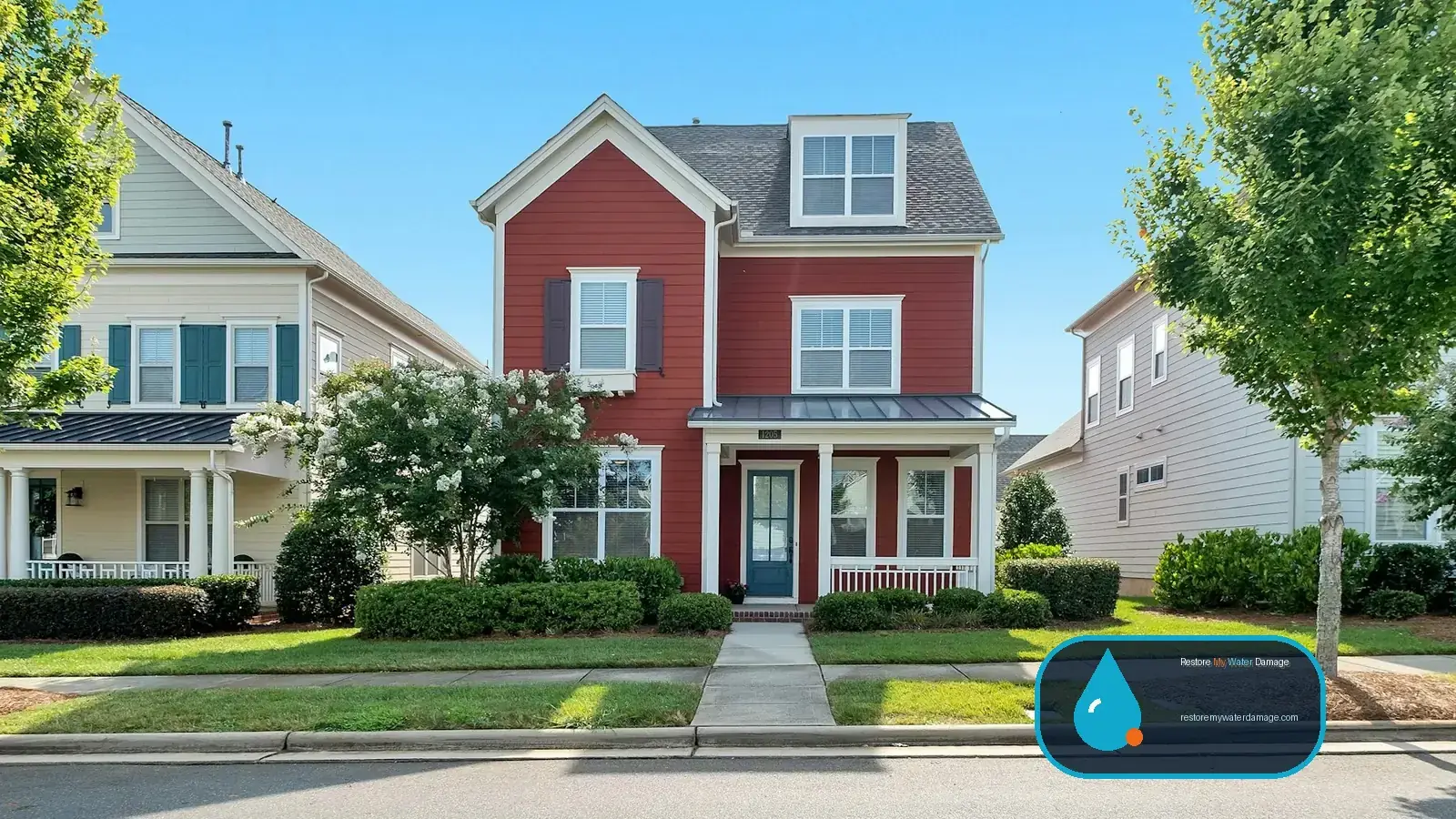
Concord is the county seat of Cabarrus County, northeast of Charlotte, and one of the fastest-growing parts of the region. Over the past few decades, large areas of farmland have become subdivisions, townhome communities and apartment complexes, particularly around Harrisburg, the Interstate 85 corridor and western Concord. At the same time, the county has deep roots: Concord's historic downtown and older neighborhoods, and Kannapolis, which developed as a textile mill town.
Restore My Water Damage connects Cabarrus County homeowners, HOAs, landlords and businesses with water damage restoration help: emergency water extraction, moisture mapping, structural drying, crawlspace drying, removal of damaged materials and cleanup after sewage or floodwater.
The distinctive angle in this market is new construction. When a large share of homes are less than twenty years old, many water damage calls involve plumbing and appliance failures in newer houses: supply line connections, water heaters in attics or garages, second-floor laundry rooms, and slab or sealed-crawlspace foundations. Older homes and creek flooding still matter too. This page covers those causes, what the property mix means for restoration, and what to do before help arrives. For urgent help, call (833) 435-4276 or see emergency water damage restoration.

Water Damage Restoration Services in Concord
Water damage restoration in Concord / Cabarrus County covers the full sequence from the first call to the final repair: stopping the damage, removing water, drying the structure to measurable dry standards, cleaning affected materials and rebuilding what cannot be saved. Every job is different, so the scope is set after an on-site inspection, not over the phone.
Emergency Water Damage Cleanup
The first hours matter most. Standing water spreads into drywall, subfloors and cabinets, and wet materials can support mold growth within roughly 24–48 hours. Emergency work focuses on safety checks, stopping further damage and getting extraction started. Learn more about emergency water damage restoration.
Water Extraction and Structural Drying
Extraction removes liquid water far faster than evaporation ever could. Drying then uses air movers and dehumidifiers placed according to moisture readings, with daily monitoring until materials reach their dry goals. See water extraction and structural drying.
Water Damage Repair and Restoration
Once the structure is dry, damaged drywall, baseboards, flooring, cabinets and paint are repaired or replaced. Some property owners use one company for both mitigation and rebuild; others hire a separate contractor. Read about water damage repair and restoration.
Fire and Water Damage Restoration
After a fire, water from sprinklers and hoses often causes as much damage as the flames. Drying and soot cleanup must be coordinated so moisture does not set smoke residue deeper into materials. See fire and water damage restoration.
Mold-Related Water Damage
When water has been present long enough for mold to grow, the job follows containment and removal practices described in the IICRC S520 standard. Ask whether mold remediation is available for your address when you call. More on mold and water damage.
Common Causes of Water Damage in Concord
Across North Carolina, the most common drivers of water damage are heavy thunderstorms, tropical storm remnants, crawl-space moisture and occasional freezes. The local factors specific to Concord / Cabarrus County are covered below.
Plumbing and appliance failures in newer homes
Newer homes are not immune to water damage; in some ways, their layouts make leaks more destructive. Two-story homes with second-floor laundry rooms, bonus rooms over garages, and multiple upstairs bathrooms mean a failed washing machine hose, toilet supply line or drain connection can send water through a finished ceiling and into the kitchen or living room below. Water heaters placed in attics or garages can fail at the tank or relief valve. Plastic plumbing systems such as PEX and CPVC are widely used and generally reliable, but improperly crimped fittings, damaged lines, and loose connections at fixtures are common leak points. Refrigerator ice maker lines, dishwasher connections and HVAC condensate lines round out the list. See burst pipe water damage cleanup.
Townhome and HOA communities
Cabarrus County has added many townhome communities, where units share walls and sometimes roofs. A leak in one unit can quickly affect neighbors, and responsibility may be split between the unit owner and the homeowners association depending on the governing documents. Restoration in these communities requires documenting each affected unit and coordinating access among owners, tenants and HOA management.
Creek flooding and stormwater in growing areas
The Rocky River, Irish Buffalo Creek, Coddle Creek, Reedy Creek and other streams drain Cabarrus County. As development replaces fields and woods with rooftops and pavement, rainwater runs off faster, and heavy thunderstorms or tropical system remnants can push creeks and stormwater ponds over their capacity. Low-lying lots and homes near creeks can see water in crawlspaces, garages and ground floors. The remnants of Hurricane Helene in September 2024 brought heavy rain and downed trees across the Charlotte region. See flood damage restoration and storm and rain water damage.
Older mill-town homes and crawlspaces
Kannapolis and older parts of Concord include homes built for mill workers and families in the early and mid twentieth century, many on vented crawlspaces with older plumbing. Humid summers create condensation under these homes, and slow plumbing leaks can rot subfloors and joists before anyone notices. Crawlspace drying and moisture control are often part of restoration in these neighborhoods.
Freezes in attics, garages and crawlspaces
During hard freezes, pipes and water heaters in attics, garages and vented crawlspaces are vulnerable. Newer homes sometimes route plumbing through exterior walls or bonus rooms over unheated garages, where it can freeze during an unusual cold snap.
Burst or Frozen Pipes
Cold snaps can freeze water in exterior walls, crawl spaces, garages and attics. Ice expands, the pipe splits, and the leak often appears only after thawing. Keep the main shutoff location known, insulate vulnerable runs and let a trickle run from exposed faucets during hard freezes.
Appliance and Plumbing Leaks
Water heaters, dishwashers, ice-maker lines, washing machines and toilet supply lines fail in every market. These are usually Category 1 (clean) water at first, but water that sits or contacts flooring and debris can degrade to Category 2 or 3.
Slab, Crawl Space and Foundation Moisture
Most homes here sit on slabs or crawl spaces rather than full basements. Water under flooring or in a crawl space is easy to miss and needs moisture meters or thermal imaging to find.
Sewer or Drain Backups
Tree roots, grease, collapsed lines and heavy rain overwhelming municipal systems can push sewage back into a property. This is Category 3 water and requires protective equipment and removal of affected porous materials. See sewage backup cleanup.
Types of Water Damage We Handle
Restoration professionals classify water by contamination level using the IICRC S500 categories, because the category decides what can be dried in place and what must be removed.
| Category | Typical sources | What it means for restoration |
|---|---|---|
| Clean water (Category 1) | Broken supply lines, faucet overflows, fresh rain intrusion | Most materials can often be dried in place if work starts quickly |
| Gray water (Category 2) | Washing machine or dishwasher discharge, toilet overflow without feces | Carpet pad and some porous materials usually removed; cleaning and antimicrobial treatment |
| Black water (Category 3) | Sewage, rising floodwater, water standing long enough to grow bacteria | Porous materials generally removed; PPE and containment required |
For a deeper explanation, read water damage categories explained.
The Water Damage Restoration Process
A professional restoration job in Concord follows the same measurable sequence used nationally. The details of each step change with the size of the loss and the materials involved.
1. Emergency Assessment
The technician confirms the water source is stopped, checks electrical and structural hazards, identifies the water category and drying class, and photographs conditions before work begins.
2. Water Removal / Extraction
Truck-mounted or portable extractors remove standing water from floors, carpet and pad. Thorough extraction can shorten drying time by days.
3. Moisture Detection
Pin and pinless moisture meters, thermo-hygrometers and thermal cameras map where water has traveled, including inside walls and under flooring.
4. Drying and Dehumidification
Air movers increase evaporation while dehumidifiers pull that moisture out of the air. Readings are logged daily until materials reach dry standards.
5. Cleaning and Sanitizing
Affected surfaces are cleaned, and antimicrobial products are applied where the category warrants. Unsalvageable materials are removed and documented.
6. Repairs and Reconstruction
Drywall, insulation, trim, flooring and paint are restored. The full restoration process guide explains each step in detail.
How Long Does Water Damage Restoration Take?
Drying a typical water-damaged room commonly takes about three to five days once equipment is in place, though dense materials such as hardwood and plaster can take longer. Repairs add days to weeks depending on scope, material availability and insurance approvals.
Timelines depend on how quickly work begins, the amount of water, the materials that got wet, the water category, and indoor humidity. Drying should end when moisture readings say the materials are dry, not on a fixed calendar date. See how long water damage restoration takes.
How Much Does Water Damage Restoration Cost?
There is no single price for water damage restoration in Concord. Cost depends on the affected square footage, water category, materials, how long the water sat, equipment days, and whether repairs are included. A written estimate should follow an inspection.
- Size of the affected area and how many rooms or floors are involved
- Water category — sewage and floodwater require more removal and protective work
- Materials — hardwood, plaster and cabinetry take longer and cost more to dry or replace
- Drying time and the amount of equipment needed
- Repairs and rebuild, which are often priced separately from mitigation
Commonly reported national figures are explained in our water damage restoration cost guide.
Does Insurance Cover Water Damage Restoration?
Many homeowners policies cover sudden and accidental water damage, such as a burst pipe, but commonly exclude gradual leaks, poor maintenance and flooding from outside. Flood damage generally requires a separate flood policy. Always read your own policy and confirm with your insurer or adjuster.
Document the damage with photos and video before cleanup, keep receipts, and take reasonable steps to prevent further damage. Restore My Water Damage can provide moisture logs, photos and itemized scope documentation for your claim. Read water damage insurance claims for a step-by-step walkthrough.
Residential vs. Commercial Water Damage Restoration
Residential property in Cabarrus County is heavily weighted toward newer single-family homes in planned subdivisions, many built since the 1990s, along with townhome communities, apartment complexes and some active-adult communities. Older housing includes Concord's historic neighborhoods, mill-era homes in Kannapolis, post-war brick ranches, and rural homes and farmhouses in the eastern part of the county around Mount Pleasant and Midland, some on wells and septic.
For restoration in newer homes, open floor plans and multi-story layouts mean water often travels across floors and through ceilings, so moisture mapping on each level is key. Materials like engineered hardwood, luxury vinyl plank over slab, and drywall ceilings respond differently to water. Homes still under builder or home warranties may involve additional parties. In townhome communities, HOA documents shape responsibilities. In older homes, crawlspaces, framing and older plumbing require closer attention.
Commercially, Cabarrus County includes large retail and outlet shopping areas, restaurants and hotels serving visitors to the area's motorsports and entertainment venues, a growing number of distribution centers and manufacturing facilities along Interstate 85, a research campus in Kannapolis, healthcare facilities, schools and offices. Commercial water losses often involve roof drains, sprinkler systems and plumbing failures in multi-tenant buildings. See commercial water damage restoration.
Homes and commercial properties follow the same drying science, but commercial jobs add tenant coordination, business continuity planning and larger equipment deployments. See residential and commercial water damage restoration.

Why Choose a Professional Water Damage Restoration Company
Professional restoration is about measurement and documentation. Household fans and shop vacuums can move surface water, but they cannot confirm that wall cavities and subfloors are dry. Hidden moisture is what leads to mold, warped floors and repeat repairs.
- Ask whether technicians are trained to the IICRC S500 standard and request proof
- Expect written moisture readings and a drying log
- Get a written work authorization and scope before large removals
- Confirm insurance coverage and applicable state or local contractor licensing
Use our guide to choosing a restoration company to compare providers.
Areas and ZIP Codes We Serve
Concord is the county seat of Cabarrus County, northeast of Charlotte along Interstate 85. The county also includes Kannapolis, Harrisburg, Midland and Mount Pleasant. This page covers 25 ZIP codes across 20 communities, including Albemarle, Ansonville, Badin, Concord, Denton, Harrisburg, Kannapolis, Locust, Midland, Misenheimer, Mount Gilead, Mount Pleasant….
27239Denton27306Mount Gilead27371Troy28001Albemarle28002Albemarle28007Ansonville28009Badin28025Concord28026Concord28027Concord28075Harrisburg28081Kannapolis28082Kannapolis28083Kannapolis28097Locust28107Midland28109Misenheimer28124Mount Pleasant28127New London28128Norwood28129Oakboro28135Polkton28137Richfield28163Stanfield28170Wadesboro
Nearby North Carolina markets: CACharlotte, GGGastonia / Gaston County, HNHuntersville / North Charlotte, SISalisbury / Iredell-Rowan Corridor. See all  North Carolina service areas.
What to Do Before Help Arrives
- Learn where your main shutoff is; in many newer homes it is in the garage, a utility closet or near the water heater.
- If water is dripping through a ceiling, turn off power to that area and stay out from under a sagging ceiling.
- Shut off the water supply at the fixture or appliance if you can identify the source quickly.
- Replace rubber washing machine hoses with braided lines and install a drain pan and leak alarm under upstairs washers.
- Check the drain pan and condensate line on attic HVAC units and water heaters.
- Townhome owners should notify neighbors and the HOA when a leak may affect shared walls.
- Before a freeze, insulate pipes in garages and crawlspaces and drip faucets on exterior walls.
- Photograph damage and keep receipts; note whether your home is still under a builder warranty.
More detail: what to do after a water leak.
Frequently Asked Questions
Why do newer homes in Concord still get water damage?
Newer homes often have second-floor laundry rooms, attic water heaters and many plumbing connections. Failed supply lines, loose or improperly crimped fittings, washing machine hoses and HVAC condensate lines are common sources. Because of multi-story layouts, water can travel through ceilings into finished rooms below.
My upstairs laundry leaked into the kitchen ceiling. What happens now?
The water supply is shut off, standing water is extracted, and moisture is mapped in the laundry floor, ceiling below and surrounding walls. Wet drywall that cannot be dried may be removed, and the structure is dried with dehumidifiers and air movers until moisture readings are normal.
Is my home builder responsible for a plumbing leak in a new house?
It may be, depending on the cause and the terms of your builder or home warranty. Document the leak with photos, notify the builder promptly, and contact your insurance carrier. Stopping the water and starting drying quickly helps limit damage regardless of who is ultimately responsible.
Who pays for water damage in a Cabarrus County townhome?
Responsibility typically depends on the HOA's governing documents, the association's master policy, and each owner's individual policy. Some associations cover exterior and shared structural elements while owners cover interiors. Notify your HOA and insurer quickly and document all affected areas.
Can water damage be dried under luxury vinyl plank flooring?
Water often gets trapped beneath vinyl plank over slab or subfloor. Planks may need to be lifted to dry the surface underneath and check for moisture. Some can be reinstalled if undamaged, while swollen or warped planks and wet underlayment are usually replaced.
Do you handle commercial water damage in Cabarrus County?
Commercial water damage restoration is available for retail stores, restaurants, hotels, offices, warehouses and manufacturing facilities. Common causes include roof drain backups, sprinkler failures and plumbing leaks. Work can be phased to help keep businesses operating.
How much does water damage restoration cost in Concord, NC?
In Concord and Cabarrus County, water damage restoration costs generally fall within national ranges of roughly $1,300 to $6,000 for a typical home job. Two-story homes with upstairs laundry or bathroom leaks can raise costs because ceilings, walls and floors below are affected. Independent providers set pricing, so ask for a written itemized estimate. Call (833) 435-4276 24/7 and we'll connect you with local help.
Can mold grow quickly after water damage in North Carolina's humid climate?
Yes. North Carolina's warm, humid summers create good conditions for mold, which can begin growing on wet drywall, carpet pad and wood within 24 to 48 hours. Running the air conditioning helps, but household fans rarely dry wall cavities fully. Professional dehumidifiers and moisture monitoring reduce the risk of hidden mold behind baseboards and cabinets. Call (833) 435-4276 24/7 and we'll connect you with local help.
How long does water damage restoration take in a Concord home?
Mitigation, meaning extraction and drying, usually takes three to five days for most Concord homes. Repairs such as replacing drywall, flooring or cabinets can add one to several weeks depending on materials and scheduling. Larger losses, contaminated water or insurance delays can extend timelines. Ask your provider for a written schedule that separates drying from rebuild.
Do I need a licensed contractor for water damage repairs in North Carolina?
North Carolina requires a general contractor license from the state licensing board for projects above a set dollar threshold, and plumbing or electrical work requires separate trade licenses. Water extraction and drying alone may not require the same license. Verify any contractor's license through the state board and request proof of insurance before rebuild work begins.
What should I do if my Concord home's water heater leaks?
Turn off the water supply valve on top of the heater and shut off the power for electric units or set gas units to pilot or off. Drain the area and move stored items away. Water heaters in garages or closets can soak adjacent drywall and flooring, so check nearby walls and start drying quickly. Call (833) 435-4276 24/7 and we'll connect you with local help.
Is a slow leak under my kitchen sink covered by insurance in NC?
Often not. Most homeowners policies cover sudden, accidental water damage but exclude damage from leaks that continued over weeks or months, as well as wear and tear. If you find rot or mold under a sink, the insurer may view it as long-term. Document the damage, fix the leak and report it promptly.
Can water damage restoration crews dry hardwood and subfloors in two-story homes?
Yes. Leaks from upstairs bathrooms or laundry rooms commonly wet subfloors, joists and the ceiling below. Technicians may open ceiling drywall to ventilate the cavity, then use dehumidifiers, air movers and floor drying systems for hardwood. Engineered floors and particleboard subfloors swell more easily, so fast action improves the odds of saving them. Call (833) 435-4276 24/7 and we'll connect you with local help.
Request Water Damage Restoration Help in Concord
Call (833) 435-4276 or send a request with your ZIP code and a short description of the damage. We will explain the next steps and we will connect you with help for your address.