
Water damage in Los Angeles rarely follows one pattern. A hillside home can take in mud and runoff during a heavy storm, a 1940s bungalow can lose a corroded supply line inside a wall, and a condo tower can send water from one unit down through several floors. Restore My Water Damage connects Los Angeles property owners with water damage restoration help for leaks, burst pipes, storm intrusion, sewage backups and flooding.
The city has a semi-arid Mediterranean climate. Rain is scarce for most of the year and then arrives in concentrated winter storms, sometimes as atmospheric rivers that drop heavy rain over a few days. Steep terrain, hardened urban surfaces and burned hillsides can turn that rain into fast-moving runoff. At the same time, a large share of the housing stock is decades old, so plumbing failures happen year-round regardless of weather.
Good restoration here starts with finding the source, extracting water quickly, and measuring moisture in drywall, subfloors, framing and slab flooring before drying with monitored equipment. If water is actively spreading, see our emergency water damage restoration page or call (833) 435-4276. Availability, scope and pricing depend on the provider matched to your property and what is found at inspection.
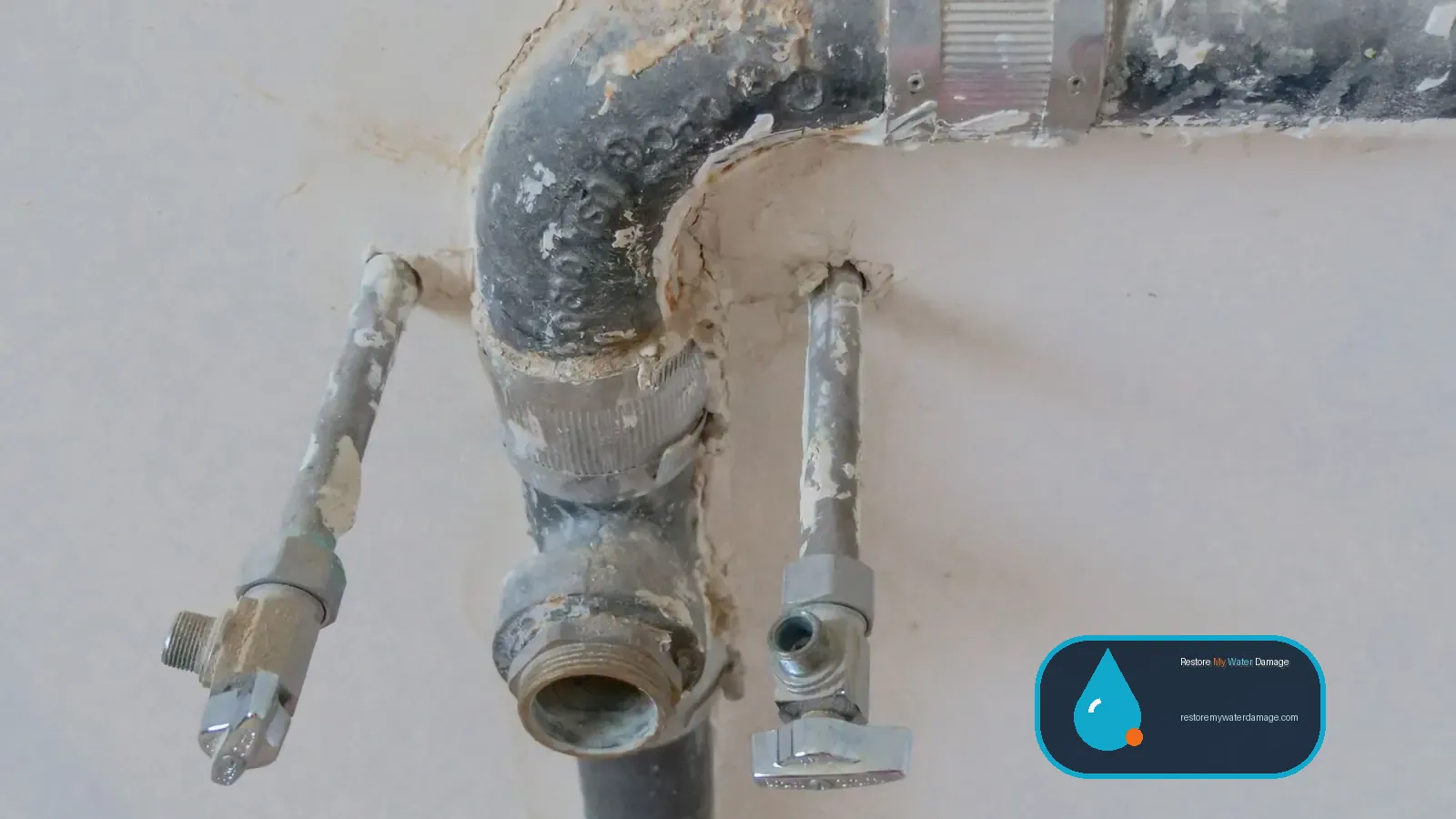
Water Damage Restoration Services in Los Angeles
Water damage restoration in Los Angeles covers the full sequence from the first call to the final repair: stopping the damage, removing water, drying the structure to measurable dry standards, cleaning affected materials and rebuilding what cannot be saved. Every job is different, so the scope is set after an on-site inspection, not over the phone.
Emergency Water Damage Cleanup
The first hours matter most. Standing water spreads into drywall, subfloors and cabinets, and wet materials can support mold growth within roughly 24–48 hours. Emergency work focuses on safety checks, stopping further damage and getting extraction started. Learn more about emergency water damage restoration.
Water Extraction and Structural Drying
Extraction removes liquid water far faster than evaporation ever could. Drying then uses air movers and dehumidifiers placed according to moisture readings, with daily monitoring until materials reach their dry goals. See water extraction and structural drying.
Water Damage Repair and Restoration
Once the structure is dry, damaged drywall, baseboards, flooring, cabinets and paint are repaired or replaced. Some property owners use one company for both mitigation and rebuild; others hire a separate contractor. Read about water damage repair and restoration.
Fire and Water Damage Restoration
After a fire, water from sprinklers and hoses often causes as much damage as the flames. Drying and soot cleanup must be coordinated so moisture does not set smoke residue deeper into materials. See fire and water damage restoration.
Mold-Related Water Damage
When water has been present long enough for mold to grow, the job follows containment and removal practices described in the IICRC S520 standard. Ask whether mold remediation is available for your address when you call. More on mold and water damage.
Common Causes of Water Damage in Los Angeles
Across California, the most common drivers of water damage are winter atmospheric-river storms, slab leaks and aging supply lines. The local factors specific to Los Angeles are covered below.
Hillside homes and slope drainage
Los Angeles has thousands of homes built on or below slopes in the Santa Monica Mountains, the Hollywood Hills and the foothills along the San Fernando and San Gabriel valleys. On these lots, water does not simply soak in. It concentrates in driveways, swales and retaining wall drains and then looks for the lowest point, which is often a lower-level bedroom, garage or crawlspace. Clogged weep holes, undersized area drains and downspouts that discharge against a foundation are common contributors. When hillside soil becomes saturated during prolonged rain, mud can push against walls and doors and enter through openings that stay dry in ordinary storms. Water that arrives with soil and debris is not clean water, and porous materials it soaks typically need removal. Our storm and rain water damage page explains that process.
Burn areas and post-fire runoff
The January 2025 wildfires, including the Palisades and Eaton fires, burned large areas of hillside terrain in and around Los Angeles. Burned slopes lose the vegetation and ground cover that normally slow rain, and public agencies routinely warn that areas below recent burn scars face higher risk of flash flooding, mud and debris flows for several rainy seasons after a fire. Homes that survived a fire, or were rebuilt nearby, can see ash-laden runoff and sediment reach garages, yards and lower floors. This type of water carries soil, ash and debris and is handled as contaminated. For losses where water entered from outside, see flood damage restoration.
Atmospheric river storms
The winter of 2023 brought a long series of storms to California, and in February 2024 an atmospheric river produced heavy rainfall across Los Angeles, with widespread street flooding, mudslides in hillside neighborhoods and roof leaks throughout the region. Storms like these expose problems that months of dry weather hide: worn roof membranes, failed flashing around chimneys and skylights, blocked roof drains, and cracked stucco that lets wind-driven rain into wall cavities. Because interior staining from a slow roof leak can take weeks to appear, a musty closet or bubbling paint after a major storm is worth checking with a moisture meter rather than waiting.
Galvanized supply pipes in pre-1960 houses
Many Los Angeles neighborhoods were largely built before 1960, and houses from that era were commonly plumbed with galvanized steel supply lines. Galvanized pipe corrodes from the inside, which narrows flow, weakens threaded joints and eventually leads to pinhole leaks or split fittings. These failures frequently happen inside walls, under raised floors or in crawlspaces, where water can soak framing and subflooring before anyone notices. Low water pressure, rust-colored water and repeated small leaks are warning signs. Older cast iron drain lines in the same houses can crack and leak slowly. See burst pipe water damage cleanup for how these losses are handled.
High-rise condos and older apartment buildings
Downtown, the Westside and corridors such as Wilshire contain many residential towers and mid-rise condo buildings. In stacked construction a failed supply line, toilet connector, water heater or fire sprinkler head can affect units below, hallways, elevator shafts and parking levels. Los Angeles also has a large inventory of older wood-frame apartment buildings, including soft-story buildings with parking at ground level that are subject to the city's mandatory seismic retrofit program. Retrofit and renovation work can disturb plumbing, and aging drain stacks in these buildings are a recurring source of leaks. Multi-unit losses involve owners, tenants, HOAs and property managers, so clear documentation of the source and the path the water took is essential.
Burst Pipes and Supply-Line Failures
Hard freezes are uncommon here, so most pipe failures come from age, water pressure, corrosion and failed fittings. Braided supply lines to toilets, sinks and washing machines are a frequent culprit, and slab leaks can hide under flooring for weeks.
Appliance and Plumbing Leaks
Water heaters, dishwashers, ice-maker lines, washing machines and toilet supply lines fail in every market. These are usually Category 1 (clean) water at first, but water that sits or contacts flooring and debris can degrade to Category 2 or 3.
Slab, Crawl Space and Foundation Moisture
Most homes here sit on slabs or crawl spaces rather than full basements. Water under flooring or in a crawl space is easy to miss and needs moisture meters or thermal imaging to find.
Sewer or Drain Backups
Tree roots, grease, collapsed lines and heavy rain overwhelming municipal systems can push sewage back into a property. This is Category 3 water and requires protective equipment and removal of affected porous materials. See sewage backup cleanup.
Types of Water Damage We Handle
Restoration professionals classify water by contamination level using the IICRC S500 categories, because the category decides what can be dried in place and what must be removed.
| Category | Typical sources | What it means for restoration |
|---|---|---|
| Clean water (Category 1) | Broken supply lines, faucet overflows, fresh rain intrusion | Most materials can often be dried in place if work starts quickly |
| Gray water (Category 2) | Washing machine or dishwasher discharge, toilet overflow without feces | Carpet pad and some porous materials usually removed; cleaning and antimicrobial treatment |
| Black water (Category 3) | Sewage, rising floodwater, water standing long enough to grow bacteria | Porous materials generally removed; PPE and containment required |
For a deeper explanation, read water damage categories explained.
The Water Damage Restoration Process
A professional restoration job in Los Angeles follows the same measurable sequence used nationally. The details of each step change with the size of the loss and the materials involved.
1. Emergency Assessment
The technician confirms the water source is stopped, checks electrical and structural hazards, identifies the water category and drying class, and photographs conditions before work begins.
2. Water Removal / Extraction
Truck-mounted or portable extractors remove standing water from floors, carpet and pad. Thorough extraction can shorten drying time by days.
3. Moisture Detection
Pin and pinless moisture meters, thermo-hygrometers and thermal cameras map where water has traveled, including inside walls and under flooring.
4. Drying and Dehumidification
Air movers increase evaporation while dehumidifiers pull that moisture out of the air. Readings are logged daily until materials reach dry standards.
5. Cleaning and Sanitizing
Affected surfaces are cleaned, and antimicrobial products are applied where the category warrants. Unsalvageable materials are removed and documented.
6. Repairs and Reconstruction
Drywall, insulation, trim, flooring and paint are restored. The full restoration process guide explains each step in detail.
How Long Does Water Damage Restoration Take?
Drying a typical water-damaged room commonly takes about three to five days once equipment is in place, though dense materials such as hardwood and plaster can take longer. Repairs add days to weeks depending on scope, material availability and insurance approvals.
Timelines depend on how quickly work begins, the amount of water, the materials that got wet, the water category, and indoor humidity. Drying should end when moisture readings say the materials are dry, not on a fixed calendar date. See how long water damage restoration takes.
How Much Does Water Damage Restoration Cost?
There is no single price for water damage restoration in Los Angeles. Cost depends on the affected square footage, water category, materials, how long the water sat, equipment days, and whether repairs are included. A written estimate should follow an inspection.
- Size of the affected area and how many rooms or floors are involved
- Water category — sewage and floodwater require more removal and protective work
- Materials — hardwood, plaster and cabinetry take longer and cost more to dry or replace
- Drying time and the amount of equipment needed
- Repairs and rebuild, which are often priced separately from mitigation
Commonly reported national figures are explained in our water damage restoration cost guide.
Does Insurance Cover Water Damage Restoration?
Many homeowners policies cover sudden and accidental water damage, such as a burst pipe, but commonly exclude gradual leaks, poor maintenance and flooding from outside. Flood damage generally requires a separate flood policy. Always read your own policy and confirm with your insurer or adjuster.
Document the damage with photos and video before cleanup, keep receipts, and take reasonable steps to prevent further damage. Restore My Water Damage can provide moisture logs, photos and itemized scope documentation for your claim. Read water damage insurance claims for a step-by-step walkthrough.
Residential vs. Commercial Water Damage Restoration
Los Angeles housing spans nearly every era of Southern California construction. Craftsman bungalows and Spanish Revival homes from the 1910s through 1930s, many on raised foundations, sit alongside postwar ranch houses on slabs, custom hillside homes with multiple levels stepping down a slope, and a large stock of apartment buildings from the 1950s through the 1980s. Newer construction includes podium apartments over parking, mixed-use buildings and high-rise condos concentrated downtown and on the Westside.
Commercial property is equally varied: office towers, studio and production facilities, restaurants, retail streets, medical buildings, hotels, schools and warehouses. Flat roofs with rooftop mechanical equipment are common, and water from a roof drain, cooling system or sprinkler line can reach tenant spaces several floors below.
Each property type changes how restoration is approached. Raised-foundation homes need crawlspace inspection and subfloor drying. Hillside homes often need exterior drainage evaluated before interior drying makes sense, since the next storm can repeat the damage. Slab homes call for moisture mapping under flooring. High-rise and multifamily jobs require coordination with building management, containment to protect occupied units, and moisture logs that several insurers may review. Our commercial water damage restoration page covers business properties in more detail. Every job should end with readings that confirm materials are dry.
Homes and commercial properties follow the same drying science, but commercial jobs add tenant coordination, business continuity planning and larger equipment deployments. See residential and commercial water damage restoration.

Why Choose a Professional Water Damage Restoration Company
Professional restoration is about measurement and documentation. Household fans and shop vacuums can move surface water, but they cannot confirm that wall cavities and subfloors are dry. Hidden moisture is what leads to mold, warped floors and repeat repairs.
- Ask whether technicians are trained to the IICRC S500 standard and request proof
- Expect written moisture readings and a drying log
- Get a written work authorization and scope before large removals
- Confirm insurance coverage and applicable state or local contractor licensing
Use our guide to choosing a restoration company to compare providers.
Areas and ZIP Codes We Serve
This market covers the city of Los Angeles, from hillside neighborhoods in the Santa Monica Mountains and foothills to the flatland neighborhoods, downtown and the Westside. This page covers 86 ZIP codes across 22 communities, including Alhambra, Arcadia, Beverly Hills, Culver City, Duarte, El Monte, Los Angeles, Marina Del Rey, Monrovia, Monterey Park, Pasadena, Playa Del Rey….
90001Los Angeles90002Los Angeles90003Los Angeles90011Los Angeles90016Los Angeles90019Los Angeles90021Los Angeles90022Los Angeles90023Los Angeles90025Los Angeles90032Los Angeles90033Los Angeles90034Los Angeles90035Los Angeles90040Los Angeles90044Los Angeles90045Los Angeles90049Los Angeles90052Los Angeles90058Los Angeles90059Los Angeles90061Los Angeles90063Los Angeles90064Los Angeles90066Los Angeles90067Los Angeles90073Los Angeles90091Los Angeles90094Playa Vista90101Los Angeles90102Los Angeles90103Los Angeles90209Beverly Hills90210Beverly Hills90211Beverly Hills90212Beverly Hills90213Beverly Hills90230Culver City90231Culver City90232Culver City90233Culver City90291Venice90292Marina Del Rey90293Playa Del Rey90294Venice90295Marina Del Rey90296Playa Del Rey90401Santa Monica90404Santa Monica90405Santa Monica91006Arcadia91007Arcadia91008Duarte91009Duarte91010Duarte91016Monrovia91017Monrovia91024Sierra Madre91030South Pasadena91066Arcadia91077Arcadia91106Pasadena91107Pasadena91108San Marino91731El Monte91732El Monte91733South El Monte91734El Monte91735El Monte91754Monterey Park91755Monterey Park91756Monterey Park91770Rosemead91771Rosemead91772Rosemead91775San Gabriel91776San Gabriel91778San Gabriel91780Temple City91801Alhambra91802Alhambra91803Alhambra91804Alhambra91841Alhambra91896Alhambra91899Alhambra
Nearby California markets: SJSan Jose / South Bay, LBLong Beach / Southeast LA, ANAnaheim / North Orange County, ICIrvine / Central Orange County, SASanta Ana / Central Orange County, IWInglewood / West LA. See all  California service areas.
What to Do Before Help Arrives
- Locate your main water shutoff now; in older houses it may be at the front of the house, in a crawlspace access or in a curbside box.
- If you live below a recent burn area, follow official evacuation orders and do not wait for water or mud to reach your home.
- Before winter, clear area drains, weep holes and gutters so runoff does not collect against hillside foundations.
- Stay out of water or mud that came from outside; treat it as contaminated.
- Turn off electricity at the panel only if you can reach it from a dry location.
- In a condo or apartment, alert building management right away so units below can be checked.
- Photograph the source and damaged areas before moving belongings.
- If you have galvanized pipes and see rusty water or repeated small leaks, have the plumbing evaluated before a larger failure.
More detail: what to do after a water leak.
Frequently Asked Questions
Are homes near the 2025 burn areas at higher risk of water damage?
Generally, yes, for properties below or next to burned slopes. Fire removes vegetation that slows rainfall, so runoff, mud and debris can move downhill quickly during heavy storms for several years afterward. Follow local agency alerts, keep drainage paths clear, and treat any mud or water entering from outside as contaminated.
Why do older Los Angeles houses have so many pipe leaks?
Many homes built before 1960 still have galvanized steel supply pipes, which corrode internally over decades. That corrosion narrows the pipe and weakens joints until pinhole leaks or split fittings appear, often inside walls or under raised floors. Rusty water, low pressure and recurring small leaks suggest the system should be evaluated.
What should hillside homeowners check before the rainy season?
Walk the property and confirm area drains, swales and retaining wall weep holes are clear. Make sure downspouts discharge away from the foundation and that nothing directs runoff toward doors or lower-level rooms. Look for cracks or leaning retaining walls, and have drainage problems addressed before storms rather than after water gets inside.
Who is responsible when a condo leak damages the unit below?
It depends on the source, your HOA's governing documents and the insurance policies involved. The unit owner, the association and neighboring owners may each carry part of the responsibility. Restoration should begin with identifying the source and mapping moisture in every affected space, with photos and readings that each insurer can review.
Does an atmospheric river storm cause different damage than a plumbing leak?
Usually. Storm damage tends to come from roofs, windows, stucco cracks and surface runoff, and water entering from outside may carry soil and contaminants. A supply-line leak is typically clean water at first. The category of water affects what can be dried in place and what must be removed.
How fast should water damage be addressed in Los Angeles?
As soon as it is safe. Wet drywall, wood flooring and cabinets absorb more water the longer they sit, and mold can begin developing within a few days in warm conditions. Stop the source, remove standing water if safe, and see our guide on what to do after a water leak.
How much does water damage restoration cost in Los Angeles?
Costs in Los Angeles often run above national averages because of labor rates. Typical national ranges run roughly $1,300 to $6,000 for common residential jobs, with sewage losses, slab leaks or large floods exceeding $10,000. Independent providers set pricing based on square footage, water category, drying time, access and repairs. Ask for a detailed written estimate. Call (833) 435-4276 24/7 and we'll connect you with local help.
How is a slab leak handled in a Los Angeles home?
A slab leak is a break in water lines under a concrete foundation, often signaled by warm floor spots, a high water bill or damp flooring. A leak detection plumber locates it, then repairs through the slab or reroutes the line. Restoration providers dry flooring, baseboards and walls and check for hidden moisture that could lead to mold. Call (833) 435-4276 24/7 and we'll connect you with local help.
Does California homeowners insurance cover water damage in Los Angeles?
California homeowners policies generally cover sudden, accidental water damage such as a burst supply line, subject to deductibles and terms, but typically exclude gradual leaks, maintenance issues, and flooding or mudflow. Flood coverage requires a separate policy. The California Department of Insurance regulates insurers and offers consumer help if you have a claim dispute.
Do I need a licensed contractor for water damage repairs in California?
California generally requires a Contractors State License Board license for construction or repair work where combined labor and materials total $500 or more, including many rebuild jobs after water damage. You can verify a license on the CSLB website. Ask any provider working in your Los Angeles home for their license number and proof of insurance before signing.
Can mold grow after water damage in a dry Los Angeles climate?
Yes. Although Los Angeles air is often dry, wet drywall, carpet pad, wood framing and wall cavities stay damp much longer than surfaces suggest, and mold can begin within 24 to 48 hours. Coastal areas can also be humid. Prompt extraction and controlled drying with moisture readings are the best protection, regardless of outdoor weather. Call (833) 435-4276 24/7 and we'll connect you with local help.
What should I do if a water heater leaks in my Los Angeles garage or closet?
Turn off the cold water supply to the heater and shut off gas or power to the unit. Move stored items away and extract water before it spreads under walls or into adjoining rooms. California requires water heaters to be strapped for earthquake safety, so a replacement installer should address that. Check nearby drywall for wicking. Call (833) 435-4276 24/7 and we'll connect you with local help.
Request Water Damage Restoration Help in Los Angeles
Call (833) 435-4276 or send a request with your ZIP code and a short description of the damage. We will explain the next steps and we will connect you with help for your address.